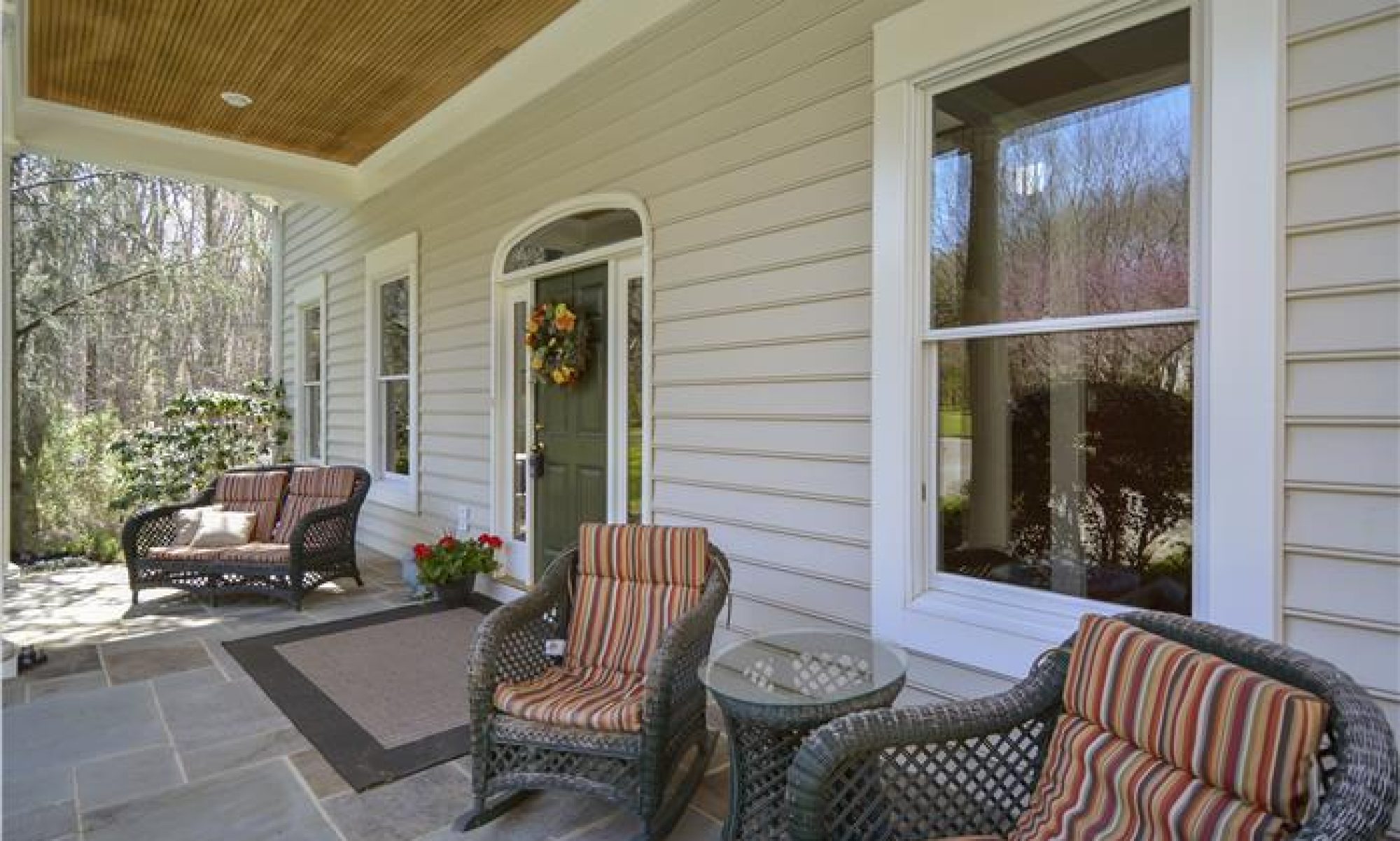
Official Support for Manufactured and Modular Housing

by Dan Krell © 2010

Politicians don’t always vote along party lines. Take for example House Resolution 584, which passed the House of Representatives on vote of 408 to 4 (19 not voting). Timing notwithstanding, the resolution entitled “Recognizing the importance of manufactured and modular housing in the United States,” was overwhelmingly passed in anticipation of National Homeownership Month (which is June); and as of May 25th 2010, recognizes the third week of June as Manufactured and Modular Housing Week.

H. Res. 584 (thomas.loc.gov) recognizes that manufactured and modular housing is not only critical in meeting the housing needs of the country, but it is also a viable industry that employs approximately 70,000 factory and retail employees that generates annual sales of approximately $6Billion. Additional recognition is directed to the use of cutting edge technology and high production standards in the construction of manufactured and modular homes; production facilities adhere to the National Manufactured Housing Construction and Safety Standards Act of 1974, which governs construction, engineering, quality, safety, and systems performance, as well as promoting innovation in safety and efficiency.

According to the Manufactured Housing Institute (factorybuilthousing.com) and the National Modular Housing Council (modularcoucil.org), a manufactured home is built in a controlled environment and then shipped to the site for installation; modular homes are built from components that are fabricated in the controlled environment and then shipped to the home site to be assembled. The MHI includes panelized and pre-cut homes in the definition as manufactured housing. Manufactured and modular homes are built to meet or exceed state and local housing codes, as well as federal Manufactured Home Construction and Safety Standards (also known as “the HUD code”).

The benefits of manufactured and modular housing include affordability, quality, and amenities. Excluding the cost of the land, the MHI estimates that the cost of a manufactured or modular home could be 10% to 35% less than a home built on-site (depending on size and complexity); financing the construction of a manufactured or modular home is less expensive and may even eliminate any interim financing (such as a construction-permanent loan) that is typically required for on-site building.

Due to the fact that manufactured and modular homes are built in a controlled environment (essentially a “factory”), all aspects of quality is constantly and carefully controlled during construction. Unlike on-site construction, where quality inspections are random and inconsistent, manufactured and modular housing fabrication quality specialists constantly monitor fabrication to ensure the final product meets or exceeds all codes. Additionally, the controlled environment protects the materials from weather and almost completely eliminates construction delays.

Amenities and features are no longer absent from manufactured and modular homes. Although these homes are built with standard amenities and features; home buyers can choose options that meet their comfort level as well as meeting their family needs. Additionally, manufactured and modular housing industry proponents tout their high volume purchasing power to lower the cost of home buyer choices of appliances and upgrades.

Manufactured and modular housing is gaining wider acceptance because of affordability and durability. Consider that many national home builders use manufactured components in constructing their larger communities; while some custom home builders use manufactured components or modules to create some of the most luxurious and expansive homes in the area. Who knows; your current or future home may be partially or completely manufactured or modular.

This article is not intended to provide nor should it be relied upon for legal and financial advice. This article was originally published in the Montgomery County Sentinel the week of May 31, 2010. Using this article without permission is a violation of copyright laws. Copyright © 2010 Dan Krell.

Shadow inventory dictates direction of housing market

by Dan Krell © 2010

Housing markets are not out of the woods yet. To know where housing is headed, you need to follow the “shadow inventory.” It is estimated that the shadow inventory will be dictating the direction of the housing market for the next twelve to thirty-six months; and contrary to some recent optimistic reports, it could get ugly.

“Shadow inventory,” simply put, is the term used to describe properties that are not yet for sale, but is expected to be listed for sale. The term is loosely used and generally refers to homes that are already owned by banks as well as homes in the process of foreclosure. However, some analysts broaden the scope of the term to also include homes that have seriously delinquent mortgages and/or in the process of a short sale.

Alarms about a threatened housing recovery due to the nationwide shadow inventory have been ringing since early 2010. Although recent reports of increased sales have been undeniably due to home buyer tax credits, economists doubt that any gains in the housing market will carry into July (one qualification for the home buyer tax credit is to close by June 30th). Even Lawrence Yun, Chief Economist for the National Association of Realtors, stated in a May 24th NAR press release (Realtor.org) that although there was an expected increase in existing home sales in April, sales will “temporarily fall back” when the home buyer tax credit expires.

Although it is expected that home buyer demand will diminish in the absence of a home buyer tax credit, a sudden exponential growth of home inventory has the potential to erode not only home buyer confidence but home values as well. It is clear that such an inventory surge can wreak havoc, as evidenced by the foreclosure surge of 2007-2008; but analysts cannot agree on the extent of the problem. Estimates of shadow inventory range from a conservative 1 million units to an astounding 6 million units.

A Standard and Poors analysis published February 16, 2010 (The Shadow Inventory Of Troubled Mortgages Could Undo U.S. Housing Price Gains) made clear the correlation between property liquidation and home value depreciation. And although the reduced number of foreclosures in the past year was due in part to attempts in assisting home owners to keep their homes (through mortgage modification programs), the inevitability of liquidating $473.4 billion in loans (which is equated to 1.75 million homes) was temporarily delayed. It is possible that home prices may again begin to depreciate as these troubled loans are liquidated (standardandpoors.com).

First American Corelogic appears to concur (Home Price Index Report – April 2010) with the premise of the S&P’s report. Although Corelogic’s Loan Performance Home Price Index (HPI) revealed an increase from February 2009 to February 2010, the report states that market stabilization has been widely due to government intervention through foreclosure prevention programs, Federal Reserve purchases of mortgage backed securities, and home buyer tax credits. Due in part to the expected conclusion of Federal Reserve purchases of MBS and home buyer tax credits, the HPI forecast from February 2010 to February 2011 is projecting a decline (corelogic.com).

Housing will undoubtedly be affected by shadow inventory. However, the affects of shadow inventory disposition may largely depend on other economic factors and government intervention; which includes (but is not limited to) employment, interest rates and foreclosure prevention programs.

This article is not intended to provide nor should it be relied upon for legal and financial advice. This article was originally published in the Montgomery County Sentinel the week of May 24, 2010. Using this article without permission is a violation of copyright laws. Copyright © 2010 Dan Krell.

Should I stay or should I go?

by Dan Krell © 2010

Many home owners are content to stay put in their homes. Talking to home owners seeking larger spaces, many are just not convinced they need to move. This is more of a phenomenon for home owners who already traded in their “starter homes.” For many of these home owners, planning expansions combined with interior design to create functional and large spaces is an alternative to (once again) engaging the process of selling and purchasing real estate.

Expanding a home can be accomplished in a variety of ways; homes can be expanded vertically and/or horizontally. In some cases, home owners make major renovations such that the home style is dramatically changed.

To build additions, expansions, or total renovations, consulting with licensed professionals is a necessity. Some home owners decide to hire independent architects and contractors, while others hire a design-build firm that has all the necessary talent “in-house.”

Weighing the options to expand or move can include financial and personal considerations. Home owners might consider the financial aspects that may include (among other items) the cost of the move (including Realtor commissions, taxes, lender fees), as well as differences in mortgage payments as compared to the cost of the expansion. Personal considerations may include thoughts of a home’s location; for example: some home owners find it difficult to leave a neighborhood that has been their home for many years, while others say moving would make their commute to work an inconvenience.

More information about home renovation/expansion as well as the design-build concept can be obtained from the Design-Build Institute of America (dbia.org) and the Mid-Atlantic Chapter of the Design-Build Institute (dbia-mar.org). The Maryland Home Improvement Commission offers useful consumer information and advice (www.dllr.state.md.us/license/mhic/mhiccon.shtml) on home improvements.

This article is not intended to provide nor should it be relied upon for legal and financial advice. Using this article without permission is a violation of copyright laws. Copyright © 2010 Dan Krell.

Home buyer incentives in post tax credit era

Did you miss the first time home buyer tax credit?

by Dan Krell © 2010

So, you want to buy a home but you’re disappointed that you missed out on the first time home buyer tax credit. Don’t worry, what I’m about to tell you about available down payment and closing cost assistance programs may be enlightening. In some cases, the total down payment and/or closing cost assistance you obtain from all sources may exceed the $8,000 offered as the first time home buyer tax credit.

Although some of these programs sound too good to be true, they’re not meant to be kept secret. In fact, they are meant to assist as many first time home buyers as possible. Sources that offer first time home buyer assistance programs include mortgage lenders, local home ownership programs; and governmental sources.

Did you know that some mortgage lenders are offering first time home buyer assistance programs? Of course, lenders want your business; but as an incentive, they are offering first time home buyer downpayment and closing cost programs. One such program is extended through the Federal Home Loan Bank of Atlanta (fhlbatl.com). Local affiliated lenders offer FHLB’s first time home buyer program by providing matching funds up to $7,500 for down-payment and closing-cost assistance to low- and moderate-income homebuyers. FHLB should be contacted for availability, guidelines, as well as local affiliates participating in their program.

Locally, the Housing Opportunities Commission (hocmc.org) administers Montgomery County’s home ownership program. Besides making available special rates for an FHA mortgage, the HOC offers the “5 for 5” program; which extends down payment and closing cost assistance as a ten year second mortgage. The program provides the home buyer up to 5% of the purchase price (up to $10,000) at a 5% interest rate.

Maryland’s home buyer program, the Maryland Mortgage Program (mmprogram.net), is administered through the Maryland Department of Housing and Community Development. The MMP is actually comprised of three programs. Besides making available the widely used CDA mortgage program, which offers low interest rate mortgages, the MMP also provides a down payment and closing cost program as well as partner matching contribution programs.

In addition to the Downpayment and Settlement Expense Loan Program (DSELP), which is a 0% interest loan up to $3,500, the MMP also includes partner match programs (The “Builder/developer Incentive,” the “House Keys 4 Employees” and the “Community Partner Incentive Program ”) that will match contributions up to $5,000. The matching contribution is a deferred loan to be repaid at 0% interest and is provided in addition to any DSELP funds.

Although the home buyer tax credit is now history, other opportunities exist for down payment and closing cost assistance. In addition to the programs mentioned above, you should remember to have your real estate agent negotiate a seller closing cost contribution ; most mortgages allow for up to a 3% seller contribution. However, you should check with your lender to see if such a contribution is allowed or if there are other limitations.

As you would imagine, taking part in lender and governmental programs require you to meet specific guidelines that typically include (but not limited to) the use of participating lenders, attending home ownership counseling, and meeting income requirements. For more information about these programs and qualifying requirements, you should contact their corresponding offices as program funding can be limited as well as subject to change without notice.

This article is not intended to provide nor should it be relied upon for legal and financial advice. This article was originally published in the Montgomery County Sentinel the week of May 17, 2010. Using this article without permission is a violation of copyright laws. Copyright © 2010 Dan Krell.

Notable Homes – Bethesda, MD

What do Edward R Murrow, Close Encounters of the Third Kind, and a Bethesda Mansion have in common? …Howard K. Smith

Howard K. Smith, for those of you who don’t know, was one of the original “Murrow Boys,” as well as being a famous journalist, commentator, and later- a movie actor. As one of the original Murrow Boys, Mr. Smith was one of the journalists who were closely associated with Edward R. Murrow at CBS during the years prior to and during World War II. As an associate of Murrow, Smith covered Pre-war Europe and Pearl Harbor. He later moved to commentator and anchor, most notably when he made a move to ABC. Besides having cameos on various TV shows, Smith also had roles in several films, most notably The Candidate, Close Encounters of the Third Kind, and The Best Little Whorehouse in Texas (http://en.wikipedia.org/wiki/Howard_K._Smith).

The Smith’s lived on this remarkable estate from 1958 until his death in 2002. The estate has fantastic spaces inside and out and is situated on over four acres of plush greenery overlooking the Potomac River.

Information is believed to be accurate, but should not be relied upon without verification. This article is not intended to provide nor should it be relied upon for legal and financial advice. Using this article without permission is a violation of copyright laws. Copyright © 2010 Dan Krell.