Fabulous New Bethesda Home – Backs to Country Club Fairway

UPDATE: SOLD!
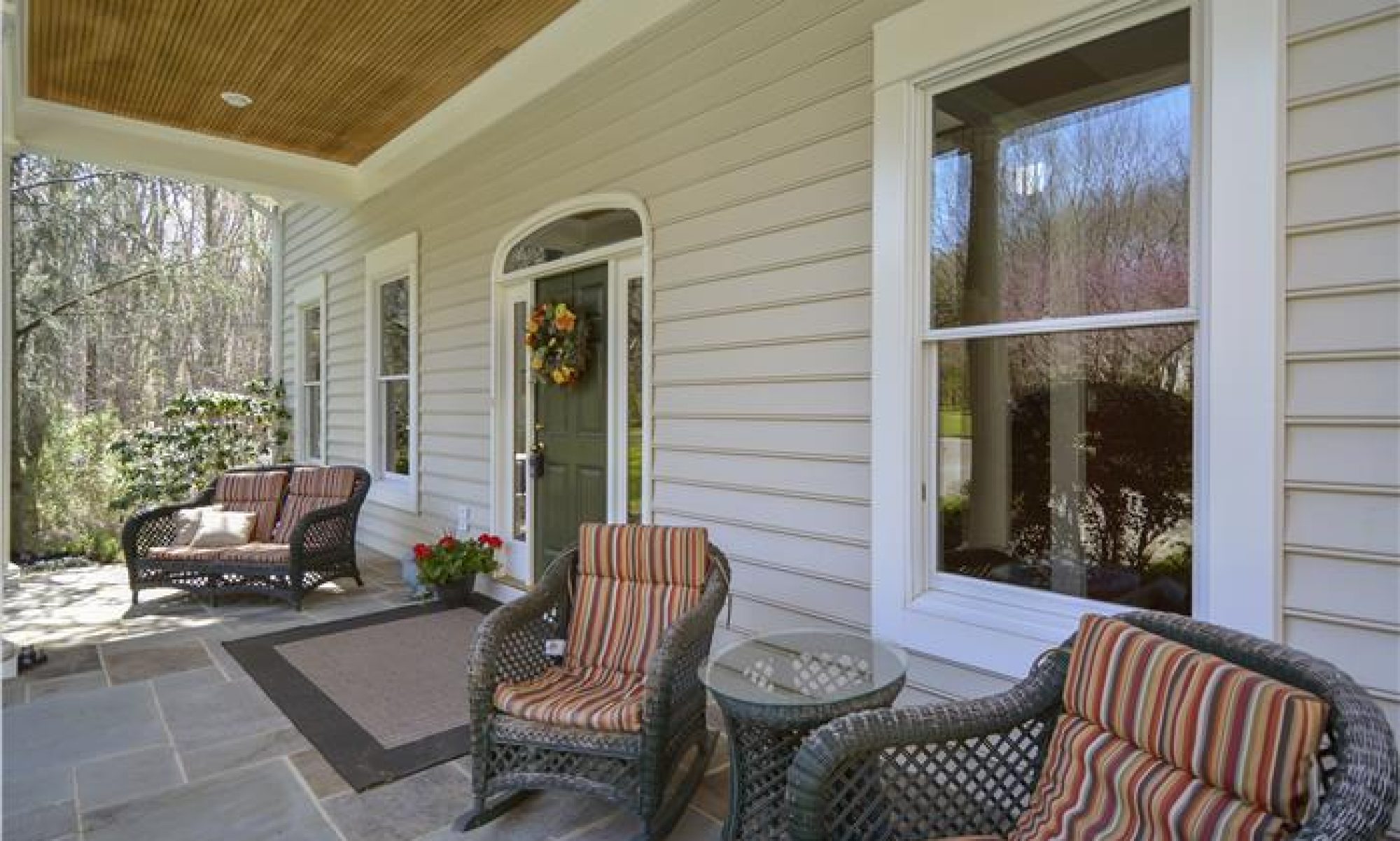
This new contemporary colonial is of note because it backs to fairway of Bethesda Country Club (Country Club membership is NOT Included in sale).

The interior features an open functional floorplan that utilize natural lighting for accent and dramatic lighting depending on time of day. All the amenities one expects from a new home: Gourmet kitchen, 3 car garage, finished lower level, soaring ceilings, lots of natural light, energy efficient features, nice size lot in sought after Bethesda neighborhood.

MC7270829 Sold!

Fabulous New Home
Did you know that the Bethesda Country Club was a top rated Maryland golf course by Golf Digest magazine (2005-2006). The club also hosted the LPGA Championship from 1990-1993.

Interested in more information about Bethesda, MD? Here is a great article about the history and other information Bethesda. More information about Bethesda, MD

UPDATE: SOLD!

Bubble market or solid economic fundamentals: Lessons we can learn from the Canadians

by Dan Krell © 2010

Bubble housing markets occur when real estate markets, either local or regional, are overvalued. The cause of bubble markets is often debated, as has been hotly argued in recent times, to be the cause of speculation and/or credit policies.

There are several real estate markets that have rebounded much faster than most such that they are in danger of becoming bubble markets. Some economists rank the real estate markets in China, Australia, and Canada as having the highest risk of becoming the next busted bubble market. Because of Canada’s close proximity and similar real estate market, we’re compelled to take a closer look.

Canada’s equivalent to the Federal Reserve Bank is called the Bank of Canada (www.bank-banque-canada.ca) and much like the Fed, the Bank of Canada is a central bank that offers advice on monetary policy. The Deputy Director of the Bank of Canada, Timothy Lane, PhD, offered his analysis on the current situation that is occurring in Canada’s real estate market in a speech given on his behalf on January 11th, 2010.

Although Dr. Lane’s speech was delivered by an advisor, in what may seem like a déjà-vu to Americans, there was somewhat of a denial of a bubble market. The Deputy Director maintained that fundamentals of the Canadian market are intact, such that recent increases in home prices are not unusual for supply and demand economics. As Canadian housing starts are below the target to meet population growth requirements, the Deputy Director made clear that inventories were diminishing as well.

Although Dr. Lane’s opinion is that housing bubbles are fueled by credit expansion, and that recent growth in the Canadian housing market is due to low interest rates and pent up demand. Mr. Lane pointed out that the Canadian housing market was not as turbulent as the market in the United States because Canadian home price appreciation was not as steep. The resulting turbulence manifested in sharp declines in American housing, while Canadian housing fared much better.

Similarities between the current Canadian housing market and the U.S. market prior to the global recession includes: historically low mortgage interest rates, reduced inventory, and increased real estate speculation. The role of increased real estate speculation is of interest because it is not only the domestic investors fueling the Canadian market, but foreign investor looking for large gains.

However, fundamental differences also exist between the markets. Dr. Lane pointed out that the Canadian mortgage system is inherently different than its counterpart in the U.S. Canadian mortgage guidelines are written primarily by mortgage insurers because mortgage insurance is compulsory for mortgages with less than a 20% down payment. Additionally, about 70% of Canadian mortgages are held by the lending institution (rather than becoming securitized) forcing the lender to make more responsible lending decisions.

Deputy Director Lane’s summation was that the Canadian housing market requires “vigilance, but not alarm.” However, they may not have much choice but to ride out market disturbances because any intervention may stall the recovering Canadian economy in a global recessionary environment.

Time will tell whether the Canadian real estate market is a bubble waiting to burst, or just a manifestation of solid economic principles. Either way, we will learn whether prudent mortgage policies can play a part in mitigating future real estate bubbles here in the U.S.

This article is not intended to provide nor should it be relied upon for legal and financial advice. This article was originally published in the Montgomery County Sentinel the week of March 8, 2010. Using this article without permission is a violation of copyright laws. Copyright © 2010 Dan Krell
Strategic Default: The new face of foreclosure

by Dan Krell © 2010

Foreclosures have been the focus of headlines for a couple of years. Monthly statistics of home owners losing their homes has created a debate about solving a crisis that has been sucking the life out of the economy and our communities. Clearly many financially challenged home owners do not have a choice about leaving their homes. However, the trend of homeowners who are deliberately not paying their mortgages is a telling story.

“Strategic default” is a term that is used to describe the processes of non-payment of a loan by a borrower who has the financial ability to pay. Although strategic default is typically used to describe the “walking away” from a financial obligation by a home owner who is not having financial difficulty, the term has become loosely used to encompass any home owner that walks away from their mortgage.

As home values have decreased, there are an increasing number of home owners who are realizing that the amount they owe to their lender is more than the value of their home (this is also known as negative equity). Increasing sentiment among many home owners is that they don’t want to continue paying for a home for which they no longer have equity. The growing number of strategic default advocates, which have spawned popular web sites such as YouWalkAway.com, may be indicative of a “movement” of sorts.

However, not all home owners who are under water will walk away from their homes; there are many moral and ethical arguments, as well as other consequences, against the strategic default of a mortgage.

Most of the research conducted after the recession of the early 1990’s (when mailing a house key to the lender was not uncommon) concluded that the lower the down payment (including down payment assistance) combined with negative equity results in significantly higher incidents of strategic default. So even though it was likely that lender analysts and actuaries knew the risks of borrowers not having “skin in the game,” they hedged their bets on an appreciating economy.

Contemporary research has pointed to the same factors when it comes to strategic default:

Downing, Stanton, & Wallace (An Empirical Test of a Two-Factor Mortgage Valuation Model: How Much Do House Prices Matter? Real Estate Economics. 2005, vol 33, Iss. 4; p. 681) concluded that mortgage termination models that do not include house price changes present significant bias to price and hedge ratios.

Austin Kelly (“Skin in the Game”: Zero Down payment Mortgage Default. Journal of Housing Research. 2008. Vol. 17, Iss. 2; p. 75) found that mortgages that required no money from the borrower (either zero down payment or receiving down payment from other sources) had significantly higher incidents of defaults.

Edmiston & Zalneraitis (Rising Foreclosures in the United States: A Perfect Storm. Economic Review – Federal Reserve Bank of Kansas City. Fourth Quarter 2007. Vol. 92, Iss. 4; pg. 115) concluded that the number of strategic defaults will increase as home values decrease and the owners are unlikely to sell.

As more options become available to home owners considering a strategic default, simply walking away without consideration of moral, ethical, and legal consequences may not be prudent. Lenders are increasingly becoming interested in working with home owners rather than have them walk away. As always, consult your attorney and/or CPA for assistance with such legal and financial decisions.

This article is not intended to provide nor should it be relied upon for legal and financial advice. This article was originally published in the Montgomery County Sentinel the week of March 1, 2010. Using this article without permission is a violation of copyright laws. Copyright © 2010 Dan Krell

Will an expected housing shortage cause another bubble market?

by Dan Krell © 2010

housing shortageLast week’s statements by Brian Wesbury may have startled the real estate industry. The chief economist for First Trust Advisers stated in an interview with Steve Forbes that the United States is headed for a housing shortage in 2011 (“Housing Shortage Coming In 2011” by Alexandra Zendrian, Forbes.com; 2/15/2010).

Mr. Wesbury’s dire prediction is predicated on housing statistics that indicate that the United States needs to add an annual average of 1.5 million homes to stay on par with population growth. The fact that housing starts and completions in the last two years have only been a fraction of the 1.5 million home target may be an indicator of a housing shortage. Even though the foreclosure crisis has added many homes to the market, the number of homes being built is significantly deficient in maintaining a reasonable pace with the population growth, according to Wesbury.

The last time people spoke of a housing shortage was in 2004, when monthly peek single family inventory for Montgomery County never exceeded 2,000 units and absorption rates of single family homes approached 80% during winter months (as reported in the 2005 Year in Review by the Greater Capital Association of Realtors). The following year, winter inventory soared and housing absorption rates did not exceed 40%. The result was a bubbling real estate market that exhibited an appreciation of 18% of single family home prices in Montgomery County from November 2004 to November 2005, even though inventory increased from 1,692 to 3,100 units for the same time period.

Cole Kendall, of Understanding Markets LLC (understandingthemarket.com), explains that the annual addition of 1.5 million homes is a benchmark that is widely used by economists to predict housing trends. The benchmark is based on a decade of demographic and economic data.

The problem is that since 2008, the Country’s economy and demography may have changed significantly, such that predictions based on historical data may be flawed. In fact, in 2008 Mr. Kendall was emphatic that over building occurred during the housing bubble. He stated that housing starts must remain low just to catch up with diminished demand, “It is impossible to know how many houses there should be in the U.S. at any time, but we can say that the gap between demographic demand and the supply of homes has been getting smaller.”

The national and local economy is vastly different today than it was earlier this dhousing shortageecade; so even if the demand for housing once again equaled the levels that existed in 2004, any resulting market gains may be expressed differently. Currently, unemployment and stricter lending policies are only a couple of changed factors that have significantly impacted the housing market in recent years. Compared to a time when many home buyers did not even need to prove they had a job (much less an income) to qualify for a mortgage, today’s lending environment is such that a home buyer not only needs to provide evidence of employment and income, they need a higher down payment as well as evidence of financial reserves to make their case for a mortgage.

There is no doubt that the housing supply is being reduced because of decreased demand. The result may not be a housing shortage, but more likely it is the manifestation of economic forces seeking equilibrium.

This article is not intended to provide nor should it be relied upon for legal and financial advice. This article was originally published in the Montgomery County Sentinel the week of February 22, 2010. Using this article without permission is a violation of copyright laws. Copyright © 2010 Dan Krell

Hyper-Local Real Estate: understanding your home’s value

neighborhood home valuesby Dan Krell © 2010

The good news is that homes are selling. However, many wonder how sales data will be expressed within their neighborhoods. Unfortunately many are finding out that, much like weight-loss infomercials, individual results may vary. As the economy shifts, homeowners are looking to their own neighborhoods for viable and meaningful data; an awareness of hyper-local real estate has emerged.

The National Association of Realtors (Realtor.org) reported on February 11th that home sales increased from the third quarter in most states; the caveat is that thirty-two percent of the sales were for distressed properties (i.e., foreclosures and short sales). Preliminary figures for 2009 indicate that about a third of the metropolitan areas experienced an increase in median sale prices from the fourth quarter of 2008.

Regional data for Maryland and Washington, DC indicate a “warming” trend. Quarterly data indicate that home sales progressively increased through the second, third and fourth quarters of 2009. The NAR calculated an annual increase of home sales of 47.9% for Maryland, and 56.3% for the District. Area home prices have seemed to appreciate as well; the NAR calculated an annual increase of 3.8% in median home prices for the Washington, DC metropolitan area (including suburban Maryland).

Locally, data reported by the Greater Capital Area Association of Realtors (GCAAR.com) indicated increases of sales (settlements) and ratified contracts of single family homes in Montgomery County during December 2009. Compared to the same time period in 2008, the number of sales increased 12.5%; while the number of ratified contracts increased 15.4%. Additionally, the year-to-date data indicate increases for sales (up 20.7% from 2008) and for ratified contracts (up 26.4% from 2008).

Differences in regional markets are due to a wide range of factors impacting each area. For example, differences between the real estate markets in the Washington, DC metropolitan area and the greater Los Angeles area can be explained by differences in economic influences (which include but are not limited to employment, commercial, and industrial influences).

Although, the adage that real estate is regional still holds water; however, some have cast a skeptical eye towards the expression of the data to their neighborhoods. It seems that neighborhood data within a region can vary significantly. Comparing specific zip codes within a region can demonstrate that regional gains or losses may not be the trend for all neighborhoods. Take for example the comparison of several Silver Spring zip codes for December 2009 (as compiled and reported by the Metropolitan Regional Information Systems, Inc.):

The number of units sold during December 2009 increased compared the same time in 2008 for the zip codes: 20910, 20902, and 20903; the number of units sold decreased during the same time period for the zip codes: 20901 and 20906. The average sold price decreased in December 2009 compared to the same time in 2008 in the zip codes 20901, 20902, 20903, and 20910; while the average sold price increased in the zip code 20906.
neighborhood home values
Specific subdivision data could further demonstrate such variances; some of the data possibly revealing extreme deviations (positive or negative) to zip code and regional data. Hyper-local real estate is not only useful to home owners, but increasingly used by home buyers as well. Hyper-local real estate is not a fad, but essential for understanding your home’s value in a meaningful way.

This article is not intended to provide nor should it be relied upon for legal and financial advice. This article was originally published in the Montgomery County Sentinel the week of February 15, 2010. Using this article without permission is a violation of copyright laws. Copyright © 2010 Dan Krell