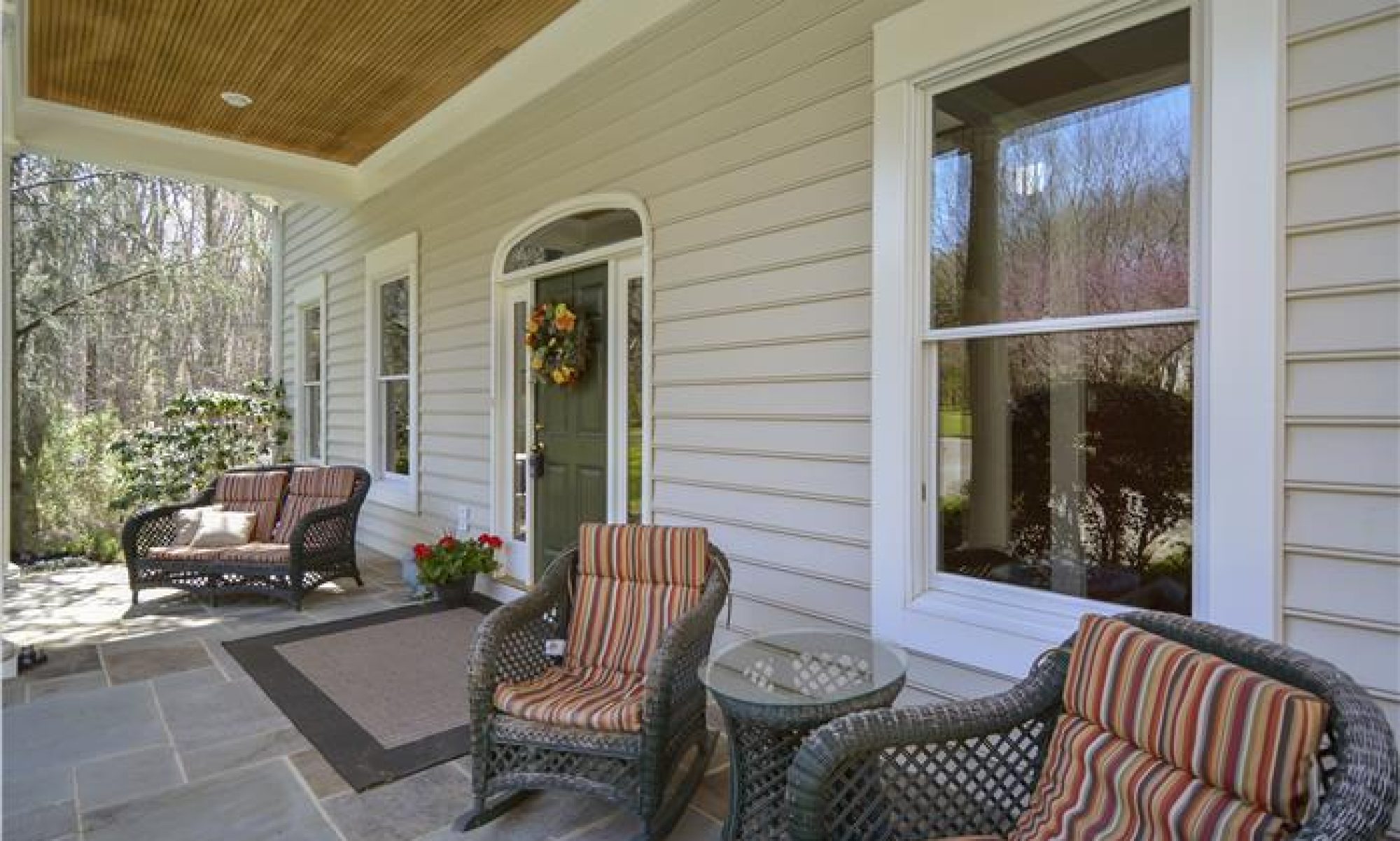
Home staging for a home sale

by Dan Krell © 2013
Google+
DanKrell.com

stage your home to sell itAs the real estate market is emerging and more homes are listed for sale, staging a home is once again becoming a popular topic of conversation. Home staging is often thought of as a fancy name for decorating or cleaning a home prior to it being sold.  In fact, “home staging” is a term that is used to describe the process of preparing your home for sale that goes beyond normal maintenance.  The purpose of “staging” is to make your home as appealing as possible to potential home buyers so your home can sell quickly.  Surveys conducted by the Accredited Staging Professionals a (StagedHomes.com) and Homegain (Homegain.com) indicate that staged homes sell faster than non-staged homes.

Although home staging has been around for over thirty years, it only gained wide acceptance this last decade. Many home staging techniques are derived from interior design; home stagers often sketch rooms to analyze the best use of space.

Staging your home’s exterior is just as important as staging the interior because a home buyer’s mood is set by their first impressions. You should consider the condition of your home’s landscape, façade, roof and gutters. Unkempt flower beds and cracked walkways can quickly give the impression that the home is in disarray. Additionally, missing shingles and misaligned gutters give the impression that the home has been poorly maintained.

The basics of home staging include de-cluttering, rearranging, and sometimes redecorating. Home sellers often have tunnel vision about their homes. Removing the clutter of your daily life from your home is the cornerstone to home staging. De-cluttering goes beyond cleaning and storing unused items. Because home buyers can get distracted by the home seller’s lifestyle when viewing a home, home stagers talk about “depersonalizing” a home.

You may have spent years making your home personal to your lifestyle, however now that you are selling it you need to depersonalize it. Depersonalization means to neutralize your home by removing as much of your lifestyle as possible from the home so anyone can feel as if this could be their home. Personal items, such as family photos, can focus the home buyer’s attention on your lifestyle and away from the home.

Additionally, the layout of each room needs to be considered so it feels bright and roomy. Properly placed furniture can assist home buyers to feel at ease and “at home.” Too much furniture in any room tends to make a large room look small and feel cramped. Additionally, misplaced furniture can make a room feel awkward and unsettling.

Let’s face it, sometimes a room needs a makeover. However, redecorating does not have to be an expensive affair. Sometimes having an extra lamp or even painting a wall can make the difference between shabby and chic. If your furniture is out of date or in poor condition, inexpensive furniture rentals can be a short term solution.

If your home vacant, staging each room tastefully can possibly facilitate a sale. An Appraisal Institute study indicated that a decorated home sells faster than an empty home.

Although many real estate agents have been certified in home staging, professional home stagers usually have a background in interior design. The International Association of Home Staging Professionals (IAHSP.com) is a source of information about home staging, including tips on staging your home as well as finding a home staging professional.

More news and articles on “the Blog”
Protected by Copyscape Web Plagiarism Detector
This article is not intended to provide nor should it be relied upon for legal and financial advice. This article was originally published the week of July 1, 2013 (Montgomery County Sentinel). Using this article without permission is a violation of copyright laws. Copyright © 2013 Dan Krell.

Saying goodbye to Fannie and Freddie

homesA recent Housingwire report (housingwire.com; Senators launch bill to boost secondary mortgage market) described a bipartisan effort to modernize the government sponsored housing finance entities.  The Senators’ plan will wind down Fannie Mae and Freddie Mac and replace them with one government “guarantor,” which is to be called the Federal Mortgage Insurance Corp.

This bipartisan effort is the latest in a succession of moves to repair and improve the nation’s housing finance markets, which began with the Housing and Economic Recovery Act of 2008 (HERA).  HERA was comprehensive legislation that was intended to address issues that caused or resulted from the financial crisis.  Besides focusing on modernizing FHA, HERA also set its sights on Fannie and Freddie by creating the Federal Housing Finance Agency (FHFA) to oversee the Government Sponsored Entities (GSE) and possibly reducing Fannie and Freddie’s role in the housing industry.

Although FHFA acted as “conservator” for Fannie and Freddie because of capitalization problems, poor financial performance and deteriorating market conditions; the role was intended to be temporary.  The oversight agency provided guidance in increasing liquidity so Fannie and Freddie would become streamlined and profitable.  Since FHFA took control, experts have speculated on the fates of the mortgage giants; some articulated an eventual shut down of Fannie and Freddie, while others described a modified role in housing finance.

For those not plugged into the industry, the replacement of the GSEs might be a surprise.  However, Housingwire reported in April (FHFA gears up for single GSE securitization platform) of FHFA’s initial plan to reduce Fannie and Freddie’s mortgage backed securities holdings.  The idea was to create a new single entity to facilitate the reduction of the GSEs secondary market involvement so as to increase private capital participation.

A June 25th press release quoted Senator Bob Corker (R-TN) (corker.senate.gov) as saying, “Five years after the financial crisis, it is past time for us to modernize our unstable system of housing finance”… “The framework we’re presenting here will protect taxpayers while maintaining market liquidity, and is the best opportunity we’ll have to finally move beyond the failed GSE model of private gains and public losses.”

Because there has not been much reform to housing finance since the financial crisis, the proposed legislation was crafted in response to the consequences of a $188 million Fannie and Freddie bailout.   The bailout resulted in a mortgage market where “nearly every loan made in America today comes with a full government guarantee,” and that private capital has all but disappeared from the mortgage secondary markets.

Co-sponsor Senator Mark Warner (D-VA) was quoted to say, ““Housing finance is the last piece of unfinished business remaining after the 2008 economic meltdown” …“We have designed thoughtful reforms that will protect taxpayers from future downturns while responsibly preserving the availability of the 30-year fixed-rate mortgage for homebuyers. We believe the housing market is ready for reforms like this, and that the private sector has been waiting for new rules of the road.”

Besides having the intention of protecting taxpayers from future bailouts, the Housing Finance Reform and Taxpayer Protection Act (S. 1217) is intended (among other purposes) to “wind down” within five years the FHFA, Fannie Mae, and Freddie Mac; “ensure that lending institutions of all sizes have access to the secondary markets;” and “transfer duties and functions” to a new entity – the Federal Mortgage Insurance Corporation (FMIC).

Protected by Copyscape Web Plagiarism Detector

By Dan Krell
Copyright © 2013

This article is not intended to provide nor should it be relied upon for legal and financial advice. Using this article without permission is a violation of copyright laws.

The next real estate technology breakthrough

by Dan Krell © 2013
Google+
DanKrell.com

Real estate predictionsBesides face to face meetings, the telephone was the only way real estate agents could communicate with their clients up until about 1990.  By the mid 1990’s the fax machine was a fixture in every real estate office and was a major method to send home listings and contract addenda to clients.  By the housing boom in 2004, large numbers of home buyers turned to the internet to get the latest home listings before other buyers; and during that time, many real estate brokers and agents were taking to the internet finding rudimentary uses for email marketing.

Much like the advances in previous technologies that made the “business” of real estate easier, current advances also seek to make the process increasingly convenient and efficient.  Before the internet was widely used, the increasing abilities of fax transmissions made communication faster and more accurate.  And even though there has not been a major technological advent since the internet, the internet experience has much improved due to the exponential advances in computing power as well as widespread wi-fi access and increasing bandwidth.

Ten years ago, most home buyers and sellers used their desktop computer to access the internet; mobile computing was somewhat in its infancy.  Advances in mobile technologies, including smart phones, have untethered home buyers and sellers; they now have access to real estate information at their finger tips any time of day, wherever there is a signal.  Additionally, real estate websites can now send listing alerts via text messages.   Technically known as “short messaging service” or sms, texting is not only allowing  the “set and forget” convenience of the home search, but allows anyone to communicate contract details and showing instructions with minimal effort.

The internet as a platform has really changed the home buying and selling experience.  Home buyers and sellers don’t have to wait for their agent to send listing information; and because they don’t have to meet with their agents to sign documents, fax machines have basically become obsolete.

Electronic signing is a technology that is becoming increasingly popular, especially for those who have busy schedules.  The technology allows a person to review and electronically sign a document it via the internet.   Too bad for Fed-Ex, as e-signing has all but eliminated the need to send packages of documents to be signed; most notably, the use of electronic signatures has made the process easier for international home buyers and sellers.

It might seem as if technology is not only allowing consumers to conduct the business of real estate with increasing convenience and efficiency, but also lessening the reliance on real estate professionals.  Ten years ago, most home buyers relied solely on their real estate agent for home listings.  Today, however, a majority of home buyers search the internet for home listings and public information.

However, as information is increasingly available, real estate professionals have become even more relied upon to decipher and provide perspective to the information that consumers are accessing.  A real estate agent’s role is continually changing from the information “gate-keeper” to information analyst.

So, I don’t expect real estate agents to be replaced by androids or Star-Trekesque holo-decks in ten years time; however, new technologies will continue to make the home buying and selling process easier and increasingly efficient.  But, who knows, maybe one day the holo-deck could allow buyers and sellers, who are thousands of miles apart, to attend settlement together.

More news and articles on “the Blog”
Protected by Copyscape Web Plagiarism Detector
This article is not intended to provide nor should it be relied upon for legal and financial advice. This article was originally published the week of June 17, 2013 (Montgomery County Sentinel). Using this article without permission is a violation of copyright laws. Copyright © 2013 Dan Krell.

The decline of today’s housing stock

by Dan Krell © 2013
Google+
DanKrell.com

Is the decline of today’s housing stock a concern or an opportunity?

new homeWhile taking part in a recent home inspection, the home inspector unexpectedly began to talk about the concern for today’s housing stock. After listening intently for a short time, I realized that his dissertation about the quality of existing homes was not just his opinion or home inspectors as a group, but rather a consensus of growing concern among housing experts of the condition of many older homes.

The issue that the home inspector pointed out is that much of the existing housing stock is aging without significant necessary maintenance or repair. Because the lifespan of many of home systems (including roofs and HVAC) range from 15 years to 30 years, as well as structural materials can have an average lifespan of 40 years; he surmised that homes that exceed thirty years of age are at significant risk.

As a home inspector, this gentleman has a unique perspective about how people take care of their homes; and unfortunately, many home owners have put off important and necessary maintenance and/or system replacements such that the home’s condition is considerably affected. And although he didn’t attribute the deteriorating housing stock with the recent recession, it is assumed that the recession contributed to the housing stock’s declining quality – if not accelerated it.

A February 2013 article by Kermit Baker for the Harvard Joint Center of Housing Studies entitled “The Return of Substandard Housing” highlighted the relative considerable reduction in maintenance spending by home owners during the Great Recession. He stated that “improvement spending” decreased 28% between 2007 and 2011, which essentially “erased” such spending during the housing boom (housingperspectives.blogspot.com).

Mr. Baker concluded that this crisis needs attention, stating; “The longer-term fate of the current slightly larger number of inadequate homes is unknown. Many of these homes likely will be renovated to provide affordable housing opportunities. However, many may not recover without extra help. Given the extraordinary circumstances that many homes have gone through in recent years, particularly foreclosed homes that often were vacant and undermaintained for extended periods of time as they worked their way through the foreclosure process, they may be more at risk than their inadequate predecessors…

Considering the number of re-sale contracts that are falling out because of home inspections, this all makes sense. New home sales aside, many home buyers want “turn-key” homes that are updated with relatively new systems. It seems as if that home buyers don’t want to be burdened with major maintenance costs for the first five years of ownership. Some of the costly considerations that can put off home buyers are replacing a roof, windows, siding, and/or HVAC. Additionally, hazardous materials that can be commonly found in older homes (such as asbestos and lead paint) are becoming an increasing concern with first time home buyers.

The reason is uncertain, but during the “go-go” market of 2004-2006, a home’s condition didn’t seem to be as much of a concern for home buyers as it is today. However, one reason may be that during that period home equity loans were relatively easier to obtain to finance renovation projects.

The result of the deteriorating quality of the existing home stock may be that we may see declining values in homes requiring the most attention; such homes may either be renovated by home buyers, or might be razed to make way for a new home.

More news and articles on “the Blog”
Protected by Copyscape Web Plagiarism Detector
This article is not intended to provide nor should it be relied upon for legal and financial advice. This article was originally published the week of June 10, 2013 (Montgomery County Sentinel). Using this article without permission is a violation of copyright laws. Copyright © 2013 Dan Krell.

Unusual considerations when owning an unusual home

by Dan Krell © 2013
Google+
DanKrell.com

Luxury Real EstateBe different and be damned…” is a telling quote from Margaret Mitchell’s Gone With The Wind.  Social commentary aside, the quote can be somewhat of a warning to those who build or purchase that unique, unusual, and one of a kind home.  Although it is just a quote from one of the highly celebrated novels of the twentieth century, “damned” is a strong word to use in a real estate column.  However, because of the many considerations of owning a unique home, there may be an occasion or two you might feel “damned.”

When would you consider a home as being unique?  Mostly, the degree of uniqueness can be to a person’s perception of a home as well as what they consider to be unusual.  However, there is some consensus to what is generally accepted as “mainstream” in the real estate industry; and if a home falls outside these norms through its construction, size, floor plan, etc – it may be considered as unusual/unique.

Some homes are so extreme in their construction, either in size and/or building materials, that it is clear they are unique and one of a kind; there are other homes that may have been converted from commercial or industrial buildings that may also indicate a unique flair.  However, there are many homes that appear to fit in their respective neighborhood, but the custom nature expresses a specific style and preference; which is often found in the luxury home market.

Some considerations you might think about when purchasing a unique home include: financing, insurance, maintenance, and resale.

If you’re set on purchasing a home that is unique, check with your mortgage lender about financing; lenders may have objections on lending on an unusual home.  It is also not unheard of that extreme unusual homes appraise lower than market value due to uncertainty of value.  Unusual homes, including the “Über-luxury” market, may require specialized loan products that are offered by specialized lenders.

Additionally, you should consult with your insurance agent as the home may not meet your underwriting guidelines for home owners insurance.  Many people don’t realize that insurance carriers may rate your home based on construction materials, zoning, size, etc, which can affect the premium.  And it’s not unheard of that an insurance carrier may also limit or even deny coverage because the home does not meet their underwriting standards.

Maintaining a unique home can sometimes be challenging too.  Many unique homes are constructed with materials that may be exotic, uncommon, and/or can be found in commercial applications.   Repairs and labor costs can be much more than the typically constructed home.  Finding replacement materials and qualified contractors to work with those materials may also be difficult.

Home ownership is often a labor of love for the home, and that emotion can be carried into the resale.  You could easily be disappointed in the time it takes to sell the home as well as the sale price.  Be prepared for an extended time on the market because your unusual home may have a very limited pool of buyers, and negotiation could be long and dragged out due to variances in perception of value.

Doing it your way” may be the theme of a popular song and an advertising campaign for burger joint; but when it comes to building or buying a home – being unique and unusual can sometimes come at a cost.

More news and articles on “the Blog”
Protected by Copyscape Web Plagiarism Detector
This article is not intended to provide nor should it be relied upon for legal and financial advice. This article was originally published the week of June 3, 2013. Using this article without permission is a violation of copyright laws. Copyright © 2013 Dan Krell.