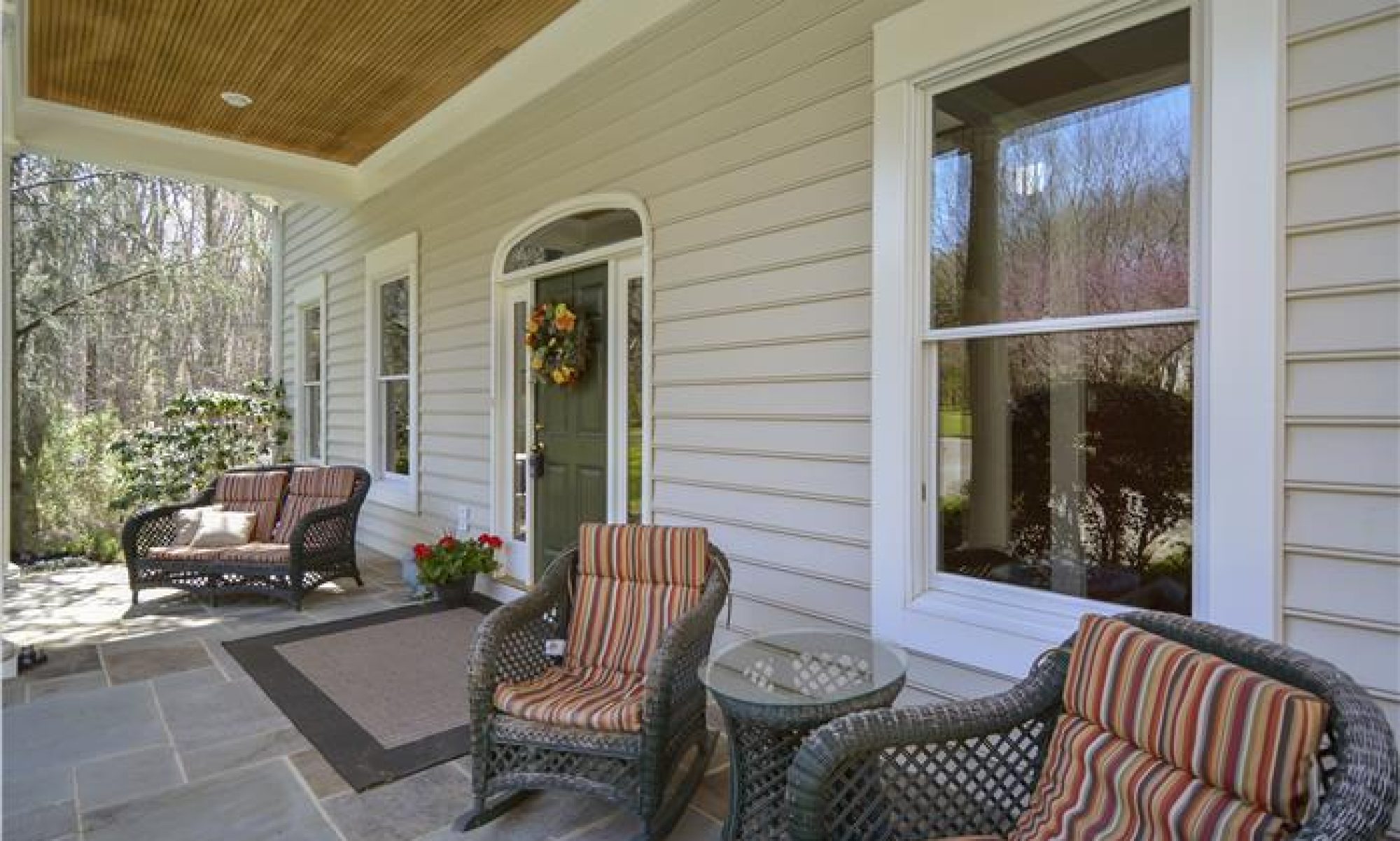
Housewarming ideas and origins

by Dan Krell
©2012
DanKrell.com

If you’ve recently purchased a home or maybe thinking of a purchase in the near future – a housewarming party may be in your future. Before you decide to hold the “open house” for friends and family, you might consider the origins of the housewarming tradition and consider incorporating some of its original tenets.

Many believe that the etymology of housewarming is believed to originate from the idea of receiving people into your home “as if to make it warm.” Some believe that the housewarming began as a means of physically warming a new home at a time before furnaces were considered to be an expected feature of a home. The home would be “warmed” by the community, who provided the firewood as the housewarming gift. However likely this may be, today’s housewarming is most likely the survival of an ancient ritual that continues with contemporary customs.

In Archaeologia, or, Miscellaneous tracts relating to antiquity, Volume 50, Part 1(Published by the Society of Antiquaries of London, 1887: viewable on Google eBooks), there is an acknowledgement to how the “modern house-warming” was part of family survival and ancient succession customs of “joint living.” The housewarming, as an extension of “joint living,” was the tradition of the family sharing food and other necessary possessions with the new home owner; so as to help them start and maintain their home. The basic idea of “joint living” was such that the extended family had stake in the new household’s survival because of property succession rituals. Sharing food during the “house-warming” was an expression of family “joint living” within the new home.

According to Domestic life in England, from the earliest period to the present time (Published by the Editor of “The family manual and servant’s guide”, 1835; viewable on Google eBooks), housewarmings during the middle ages were restricted by King Edward III to “certain ranks.” However, it may be that housewarmings regained popularity when King Richard II held a housewarming for the re-building of Westminster Hall in 1397; it is believed that ten thousand people attended and feasted at this housewarming.

The custom of giving bread, salt, and sometimes wine is a contemporary custom that appears to have developed from ancient feasts and family survival rituals. The symbolism implied is to have abundance and happiness in the home.

Obviously, housewarming customs have changed over time. From helping to heat a home and feed the family, the housewarming has been extended beyond family to include friends, neighbors, co-workers. Much like King Richard’s housewarming, guests are often fed rather than feeding the new home owners. Housewarming gifts have also changed; guests, who years ago thought nothing more than bringing food and firewood, might think of helping with the home’s aesthetics and comfort by bringing objects d’art such as paintings and knick-knacks. Today, contributing to the new home owner’s first mortgage payment might be a welcome housewarming gift.

When planning your housewarming, consider creating new traditions and/or incorporating customs from your cultural heritage. Housewarming customs vary around the world; some traditions are spiritual while others are symbolic. Some cultures are very meticulous about the housewarming ceremony and gifts (some cultures require the move-in day to coincide with astrological charts).

Remember that the purpose of the housewarming is to initiate the first of many happy times in your home, so have fun with it and enjoy!

Original published at https://dankrell.com/blog/2012/01/26/housewarming-ideas-and-origins/

More news and articles on “the Blog”
This article is not intended to provide nor should it be relied upon for legal and financial advice.  Using this article without permission is a violation of copyright laws. Copyright © 2012 Dan Krell.

SOPA and real estate; Unintended consequences?

If you don’t surf the web very often, you may not have heard about SOPA and PIPA. No, SOPA is not something to wash with nor is PIPA the Duchess’ sister.

SOPA (H.R. 3261: Stop Online Piracy Act) and PIPA (S. 968: Preventing Real Online Threats to Economic Creativity and Theft of Intellectual Property Act of 2011; also known as Protect IP Act) were introduced with the intent to stop internet piracy and protect intellectual property. Essentially, the legislation gives the government authority to take down websites if a court finds a site in violation of the legislation; these websites would be considered “rogue” sites.

The main intention of the legislation is to protect intellectual property and revenue; there has been an annual increase of complaints of internet piracy, unauthorized copying, and counterfeit products that proliferates the internet. The bills are in the process of the maneuvering through Congress. H.R. 3261 is in “committee,” which is typically the first step after a bill is introduced in the House of Representatives; while S. 968 was recommended to be voted on by the Senate. Although the bills are the center of controversy, it is possible that they might not pass; but rather the wording could be incorporated in other legislation (much like the Indefinite Detention Without Charge or Trial provision that was included in the National Defense Authorization Act for Fiscal Year 2012, which was signed into law December 31st).

SOPA lists, among other things: expanding the definition of criminal copyright infringement; expanding what constitutes criminal trafficking of inherently dangerous goods or services; as well as increasing penalties for specified trade secret offenses and various other intellectual property offenses.

Supporters for SOPA/PIPA contend that internet theft has reduced corporate earnings; passing this legislation would protect their intellectual property from illegal distribution on the internet by shutting down or restricting access to offending websites, thus protecting revenue and entrepreneurship.

Critics claim that the legislation is an over reach and has the potential for abuse, which if passed could allow larger companies to control internet commerce by forcing competitors to take down competing websites. Some argue that such legislation, which concerns many bloggers and some news outlets, may conflict with the first amendment.

For example: the operators of Craigslist claim that if the legislation passes, they may be ordered to shutdown (http://www.techdirt.com/articles/20111005/10082416208/monster-cable-claims-ebay-craigslist-costco-sears-are-rogue-sites.shtml); Craigslist is listed by Monster Cable® as an “unauthorized dealer” and “blacklisted” along with Sears, Costco, eBay, and many other sites for allegedly selling counterfeit products (http://www.monstercable.com/).

The internet has become a major source of real estate information; consumers and professionals search the internet daily for home listings by brokers and FSBOs, housing and economic news, legislation, public and other related information. The National Association of Realtors® 2010 Profile of Buyers and Sellers indicate that 89% of home buyers use the internet for information and home searching. The number of home buyers, sellers, and owners using the internet to assist them in making a real estate related decision grows annually.

Although the consequences of enacting SOPA/PIPA into law (on the real estate industry) are unclear, it would be undesirable and unfortunate if readily accessible real estate information were to be unduly restricted by some association’s or real estate company’s claim of content ownership. Learn more about SOPA/PIPA, and provide feedback to our Representatives and Senators.

by Dan Krell
© 2012

This article is not intended to provide nor should it be relied upon for legal and financial advice. Using this article without permission is a violation of copyright laws.

Buying a home after a foreclosure or shortsale

by Dan Krell
© 2012
DanKrell.com

If you’ve been through tough financial times, you know that it feels as if your financial picture may never improve. But for most people, experiencing a financial challenge turns out to be just a blip in time; they eventually move on with their life. Given that notion, mortgage lenders know that people endure temporary financial problems through their lives- underwriting guidelines may allow for a past foreclosure, short-sale, or even bankruptcy.

In the old days (prior to desktop underwriting), underwriting was “manual,” meaning that a loan’s approval or denial was decided by a human who reviewed your file. If you were lucky enough to borrow from the local small neighborhood lender, there was a very good chance they knew you, your family, and your financial circumstances (much like the Bailey Building and Loan from “It’s a Wonderful Life”); you had a chance to provide explanations and compensating factors to increase your chance of being approved.

Today, mortgage underwriting is mostly accomplished through automated systems, such as “Desktop Underwriter” and “Loan Prospector.” The automated systems make decisions based on algorithms and do not have the ability to weigh circumstances for negative reports on a credit history. Some lenders may still provide manual underwriting, but borrower requirements have become increasingly strict (including higher minimum credit scores).

Take heart; you still may be able to get a mortgage after a foreclosure, short-sale, or bankruptcy.

For conventional mortgages underwritten with Fannie Mae guidelines, you’ll have to wait at least seven years after a foreclosure. Likewise, you’ll have to wait seven years after a short-sale- unless you can muster a large downpayment (you may be able to qualify: after two years with a 20% downpayment; and four years with a 10% downpayment)! You’ll have to wait four years after a chapter 7 bankruptcy is discharged; and two years after a chapter 13 is discharged (but four years if the chapter 13 is dismissed).

For FHA mortgages, you’ll have to wait at least three years after a foreclosure, two years after a chapter 7 bankruptcy discharge, and one year current on a chapter 13 payment plan (with court approval). A short-sale is differentiated depending if the loan was in default: if the loan was not in default at the time of the short-sale and your previous 12 months payments were timely, you may be eligible for a FHA mortgage; however if the loan was in default prior to short-sale, you will have to wait at least three years before you can qualify.

If you are eligible for VA financing, you will have to wait two years after a foreclosure, short-sale, and chapter 7 bankruptcy (one year into a chapter 13 payment plan with court approval). However, if your foreclosure or short-sale was on a VA mortgage, then your eligibility may be reduced.

If you’re financial issues were caused by circumstances beyond your control, you may be able to get an exception that could shorten the waiting periods. However, you’ll have to provide documentation for the underwriter to review, and not all lenders grant such exemptions.

There are many different mortgage programs, and underwriting guidelines vary. The timelines and requirements posted here are as of time of article; it’s very possible that these guidelines will or have changed. It’s important to talk to a licensed loan officer to know what you need to qualify, as well as which mortgage program will be best for your particular circumstances.

More news and articles on “the Blog”
This article is not intended to provide nor should it be relied upon for legal and financial advice. This article was originally published in the Montgomery County Sentinel the week of January 9, 2012. Using this article without permission is a violation of copyright laws. Copyright © 2012 Dan Krell.

What’s the return on your investment?

by Dan Krell
© 2012
DanKrell.com

If you’ve been wavering over the decision to moving into a new home versus renovating your current home; or maybe you’re planning a sale this year and thinking of making improvements to improve the home’s appeal- here’s a resource to help. According to the Remodeling 2011–12 Cost vs. Value Report (www.costvsvalue.com), you can get an idea of how much return on your investment you might get from some of the most popular renovation and addition projects that people undertake.

The 2011-2012 Cost vs Value Report, published annually by Remodeling Magazine, is now available and compares the top remodeling projects and the value that you might recoup at resale. The Cost vs Value ratios were collected for major cities/regions across the country. While project costs were obtained from a construction estimates database compiled by Home Tech Publishing, the project resale values were obtained through a National Association of Realtors® survey of appraisers, agents and brokers.

It is noted that a project Cost vs Value ratio is typically higher in “hotter” real estate markets, and can sometimes exceed 100% (recouping more than was spent on the project at resale). This idea is consistent with the annual Trends in Cost vs Value, which indicates that the average return on investment was higher when the housing market was at the peak in 2005. Of course a major reason for decline in the Cost vs Value ratio from the peak has been the retreat of home prices nationwide. There is speculation that since the national ratio decreased less this year than recent years, the housing market may be bottoming out.

Besides differences in local home prices, differences in regional Cost vs Value ratios can also be attributed to variances in labor and materials costs. Some experts point to a glut of construction workers who are seeking work as a reason for decreased labor costs in some areas; while material costs have not changed much or have become more expensive.

The Cost vs Value Report groups the Washington DC area in the South Atlantic region, which was ranked as the third highest Cost vs Value ratio out of nine regions. The South Atlantic region averaged a ratio of 67.3%, while the highest performing region was Pacific with a ratio of 71.3% was and the lowest performing region was the West North Central with a ratio of 49.5%.

Enough of the technical stuff…
The top Cost vs Value ratio midrange job for the Washington DC area is a garage door replacement, which is estimated to recoup about 93.2% of the cost at resale; followed by a wood deck addition, which is estimated to recoup about 91.3% of the cost at resale (compared to a composite deck addition which is estimated to recoup only 78.8% of the cost).

The top “upscale” project is a fiber-cement siding replacement, which is estimated to recoup 89.7% of the cost at resale (compared to foam backed vinyl siding, which is estimated to recoup only 78% of the cost). The “upscale” garage door replacement is estimated to only recoup 81.4% of the cost (compared to the replacement described above).

Additional projects and descriptions of the projects with costs can be viewed in the Cost vs Value Report. The full Washington DC area renovation/addition Cost vs Value report can be downloaded at costvsvalue.com.

More news and articles on “the Blog”
This article is not intended to provide nor should it be relied upon for legal and financial advice. This article was originally published in the Montgomery County Sentinel the week of January 2, 2012. Using this article without permission is a violation of copyright laws. Copyright © 2012 Dan Krell.

Real Estate in review 2011

Since the housing downturn, optimistic predictions the real estate market have been forecasted annually. However, what we have seen in retrospect is that home buyer incentives along with other housing stimulus measures have only acted to maintain an ailing housing sector from deteriorating further. Some still await the market bottom. And although 2011 revealed additional weaknesses in global economic systems as well as the unintentional consequences of policy and regulation, 2011 felt as if it was the most optimistic year in real estate since the downturn.

2011 will be remembered as the year that the National Association of Realtors (NAR) revised existing home sales down 14.3% for estimates between 2007 and 2010 (data released on December 21, 2011 and available on realtor.org). Regardless of the re-benchmarking of data, the NAR has announced that existing home sales in 2011 continue to strengthen as November’s data indicates increased sales from the previous year (really?).

2011 was not the year for home price gains, however. Home prices continued to decline nationwide. However, the Washington DC and Detroit metro areas were the only two regions that posted positive home price gains from the previous year according to the S&P/Case-Shiller Home Price Index.

2011 was the year that housing finance reform continued to crawl forward, while Wall Street reform seemed to move quickly with the passage of the Dodd-Frank Wall Street Reform and Consumer Protection Act. Although Dodd-Frank seemed to be focused squarely on Wall Street, it appeared to be far reaching with the requirements such as the 20% down payment Qualified Residential Mortgage (QRM).

2011 will be remembered as the year that the Eurozone almost collapsed. The financial déjà-vu that played out over the summer (and is still yet totally resolved, mind you), threatened markets worldwide- including the U.S. housing market. The sharp economic decline, that some braced for, was averted.

2011 was the year that we saw a bifurcated market become increasingly significant. The upper-bracket/luxury home market appeared to stabilize ahead of other housing, as upper-bracket/luxury housing activity remained strong. In fact two of the most expensive homes in Washington, DC sold this year! Reports that Evermay, the DC mansion that was originally listed for $49 Million, sold for $22 Million in July; while Halcyon House was reported to sell a couple of months later for $12.5 Million.

Regardless of the continued efforts of government preparedness campaigns (remember the Center for Disease Control “Zombie Apocalypse” preparedness campaign on blogs.cdc.gov?); 2011 will be remembered as the year that nature made a point about preparedness. If you weren’t concerned about preparing for the Mayan 2012 prophecy; then enduring hurricanes, floods and an earthquake probably had you at least checking your homeowners’ insurance.

As foreclosures declined in 2011, it seemed as if reports of mortgage lender abuses increased. Lenders appeared to be under fire from class action lawsuits as well as attorneys general for lending practices and foreclosure procedures; Bank of America recently reportedly settled a lawsuit for $335 Million.

Alas, the year is almost over; having us searching for fond memories of 2011 and wondering what will 2012 bring. Some look for home prices to make some gains in the coming year (homepricefutures.com), however more importantly you can probably expect the housing market to be glamorized in the pomp and circumstance of the election cycle of 2012.

This article is not intended to provide nor should it be relied upon for legal and financial advice. Using this article without permission is a violation of copyright laws.

by Dan Krell
© 2011