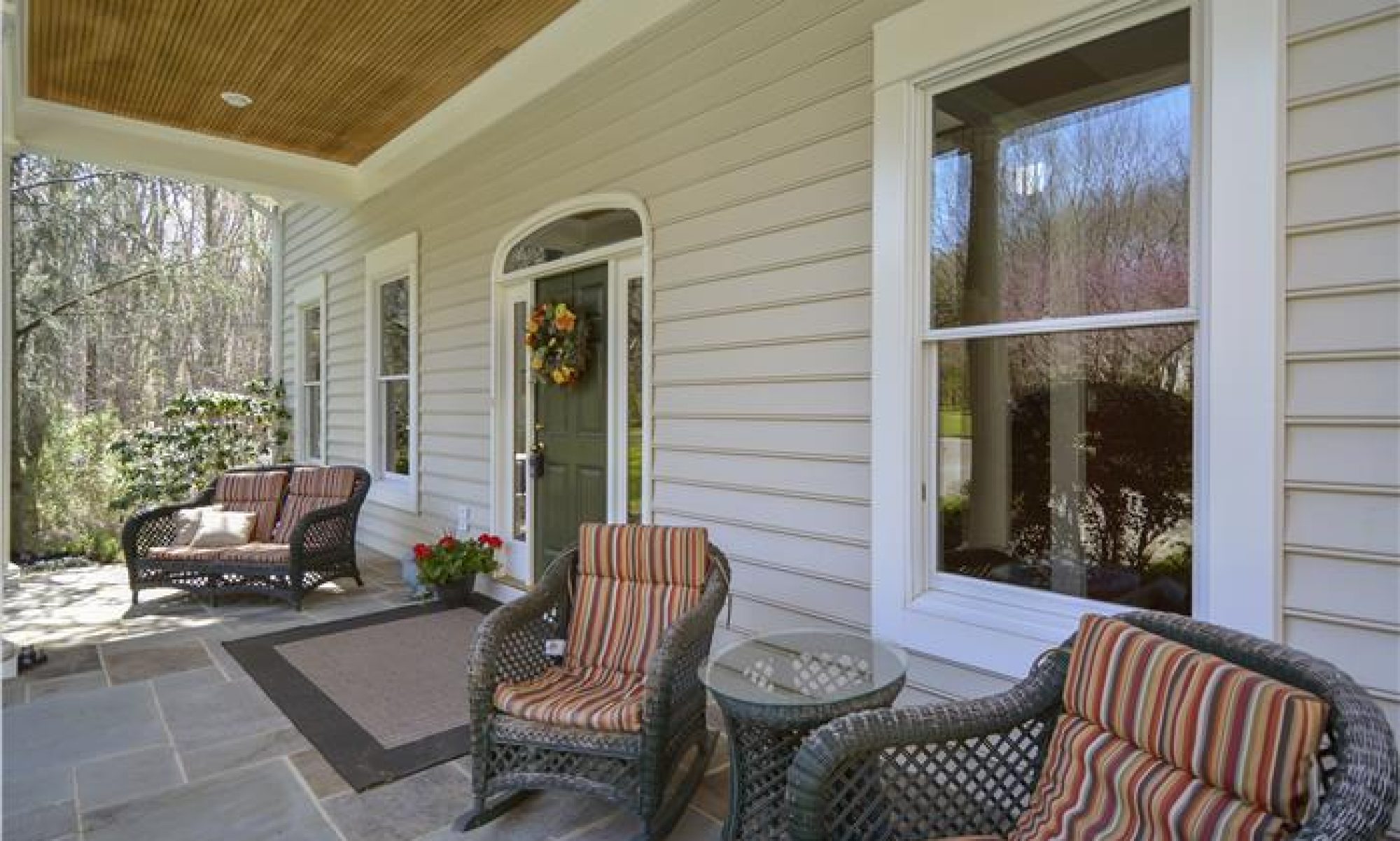
Luxury home sales outpace mid-low tier sales

Luxury Real Estate

What seemed like the breakout year in real estate may turn into a hard act to follow. Although the National Association of Realtors® May 22nd news release made headline news by skillfully pointing out that April existing home sales increased 1.3% from March; April’s sales data were 6.8% lower than last April. Much like the assertion to “Keep Calm and Carry On,” the spin on data may bean attempt to motivate home buyers and sellers.

The Greater Capital Association of Realtors® home sale statistics were consistent with NAR’s, such that Montgomery County MD single family home sales decreased about 8.2% in April compared to the same time in 2013. Looking deeper, the numbers reveal a similar scenario that played out in 2011 when a bifurcated market emerged between upper bracket and middle to low bracket homes. Sales of upper bracket homes are doing very well this year, while moderate to lower bracket homes sales are decreasing compared to last year. And much like 2011 when luxury home sales hit record prices (when DC’s Evermay and Halcyon House sold); 2014 is also a year of record luxury home sales (LA’s Fleur-de-Lys sold for $102M, CT’s Copper Beech Farm sold for $120M, and a NY mansion sold for $147M; each sale successively breaking the record for most expensive residential US home during a 5 week duration!). Consistent with this theme: cash sales are increasing this year, while first time home buyers are decreasing.

While the housing market may be shaping up to be similar to that of 2011, the reasons for a similar profile are different. We were looking for the market bottom during 2011, as well as assimilating an unprecedented number of distressed properties. However, even though distressed sales are rapidly decreasing; 2014 was supposed to be an extension of last year’s increased sales activity.

What we may be experiencing is the flip side to the housing crisis, as described by Daren Blomquist, RealtyTrac Vice President in his May 19thblog post (Nearly One-Third of Americans Live in Counties Where One in Five Homeowners is Underwater: Heat Map; RealtyTrac.com). Blomquist characterized the lack of participation in today’s market as being from the unusually high number of home owners with high loan balances on their home, including the many whose mortgages are underwater. This lack of participation is much like the many homes taken out of the market because of the foreclosure crisis during the downturn. He stated that the “normal flow [of move-up buyers] is being disrupted by homeowners with negative equity who are holding back from becoming move-up buyers, which in turn is impacting the availability of inventory downstream for first-time homebuyers.” According to RealtyTrac, those who are “seriously underwater” (125% or higher of loan balance to home value) account for 11% of Montgomery County MD home owners, while the county average loan balance to home value is about 79%.

The idea of the inactive move-up buyer is not new. In fact it seems to be that move-up buyers were lacking after other deep recessions; the August 17, 1985 article published in the Chicago Tribune titled, “Move-up Buyer Provides The Base For A Recovering Housing Market” is a testimony for such behavior. The timing for the move-up buyer is likely correlated to the time necessary to either recover lost equity; or reach a comfort level for the net amount gained in their home sale.

Protected by Copyscape Web Plagiarism Detector

By Dan Krell
Copyright © 2014

Disclaimer. This article is not intended to provide nor should it be relied upon for legal and financial advice. Readers should not rely solely on the information contained herein, as it does not purport to be comprehensive or render specific advice. Readers should consult with an attorney regarding local real estate laws and customs as they vary by state and jurisdiction. Using this article without permission is a violation of copyright laws.

Squatters and real estate – a reality in today’s economy

House

Although some squatters move into vacant homes to live rent free, others do so to take advantage of adverse possession laws. The squatter movement has grown, not just in the U.S. but significantly in Europe as a means of social change. Activists advocate squatting as a response to Europe’s high unemployment, austerity, decreased public housing and declining living standards. Currently touted as “alternative housing,” squatting in the U.S. increased during the time when foreclosures and vacant homes skyrocketed after the financial crisis.

A recent story, about squatters taking over the Florida home of an active duty soldier who is stationed in Hawaii, highlights a recent trend. According to Florida’s WFLA Channel 8, the home owner claimed people broke into his home and changed the locks; however, the squatters who moved into the soldier’s home claimed to have a verbal agreement with the home’s caretaker to live in the home while making repairs. When the Afghanistan veteran planned to moved back to Florida, he was caught off guard when he was told removing the squatter was a civil matter and had to go through the eviction process to rid the home of the invaders. As the story gained national attention, veteran groups hired an attorney to begin eviction. However, it appears that the combined pressure has facilitated the squatters’ departure; but not without making a statement of their own by leaving the home in disarray and their dogs to roam freely.

Two local cases of squatting were reported last year, where defendants claimed “sovereign rights.” A vacant, bank owned Waldorf home was reported to be occupied by seven individuals who claimed to have the right to occupy the home because they are “sovereign citizens.”

A March 18, 2013 Washington Post article (Moorish American national’ charged with trying to take mansion) highlighted the other case, where an individual also claiming sovereign rights moved into a vacant $6 million Bethesda home listed for sale. The squatter allegedly attempted to change the tax records to indicate he was the owner by appearing at the Montgomery County court house and presenting “historical” documents and maps. But the county clerk turned him away saying that a “proper deed” was needed for such a change. The squatter reportedly went as far as emailing the listing agent cryptically claiming ownership. According to news reports, the squatters in both local cases were charged by police.

The Bethesda case emphasizes that bank owned foreclosures are not the only homes occupied by squatters, vacant homes listed for sale are also targets. Nationwide reports about squatters in upper bracket luxury homes increased last year, as well as the attention to “squatter’s rights” and adverse possession laws.

Last July, Sheree R. Curry of AOL Real Estate (Squatters Beware: States Are Revising Adverse Possession Laws) highlighted the case of a squatter who moved into a Boca Raton, FL mansion listed for sale. The squatter was eventually “locked out” of the home, but the events moved the community in an effort to change Florida’s Adverse Possession laws. And although adverse possession laws vary throughout the country, Curry reported that some states are revising these laws to protect home owners. New York and Washington had already changed adverse possession laws when Florida changed theirs to prohibit “acquiring title to real property by possession”; which went effect July 1st 2013.

by Dan Krell © 2014

Protected by Copyscape Web Plagiarism Detector

Disclaimer. This article is not intended to provide nor should it be relied upon for legal and financial advice. Readers should not rely solely on the information contained herein, as it does not purport to be comprehensive or render specific advice. Readers should consult with an attorney regarding local real estate laws and customs as they vary by state and jurisdiction. Using this article without permission is a violation of copyright laws.

Housing recovery is cliché

real estate

The word “recovery” has been used a lot over the last five years.  So much so, it seems as if the term is automatically associated with anything written about real estate and housing.  But, maybe it’s time for a shift in our perception and expectations.

If you look up the definition of recovery, you might find: “re·cov·erynoun \ri-ˈkə-və-rē,\ : the act or process of returning to a normal state (after a period of difficulty).”  It might make sense to refer to the housing market as still recovering, and in the process of returning to normal; but then again, who’s to say that the home price and market activity peaks realized during 2005 – 2006 was normal?

A number of research papers (such as Reinhart & Rogoff’s The Aftermath of Financial Crises) were produced to discuss how the recovery from the Great Recession would take shape.  Although there is not a clear consensus, many concluded that a recovery after a financial crisis is much longer in duration than recoveries from non-crisis recessions.  However, some claim that may not be the case because the comparisons to other financial crises around the globe are not analogous the U.S. financial system.

Regardless, maybe the use of the term “recovery” is, after five years, cliché.  Niraj Chokshi seemed to allude to this in his November 2013 article on Washingtonpost.com, “What housing recovery? Home values and ownership are down post-recession.”  Chokshi pointed out that home ownership and home values have not even recovered to the levels of the three years during the recession (2007-2009).

But then again, it could be that there is a journalistic license to use “recovery” when referring to housing; because there is an expectation for the real estate market to return to the peaks it experienced in the last decade.  An April 7th National Association of Home Builders (nahb.org) press release of the NAHB/First American Leading Markets Index was titled, “Latest NAHB Index Reading Shows Recovery Continues to Spread;” highlighted that there are 59 of 350 metro areas that “returned to or exceeded” their normal market levels.  However, “market levels” are based on a metro area’s employment, home prices, and single family home permits (it is unclear if the labor participation rate, which is the labor force as a percent of the civilian noninstitutional population, is included in the employment data).

Talking about a recovery is no longer acceptable for home buyers and sellers planning their futures; rather it is more appropriate to again talk about relative market conditions.  Considering that references to a recovery that is extending into a fifth year seems distant and confusing; the dramatic changes that the industry underwent after the recession makes it almost inconceivable for the marketplace to return to the exact state that existed prior to 2007.  Relative market conditions are more meaningful to home buyers and sellers, specifically when they are deciding listing and offer prices.

Although the National Association of Reltors® Existing Home-Sales stats are due out April 22nd, and Pending Home Sales Index due April 28th; Wells Fargo Housing Chartbook: March 2014 (April 9, 2014) states, “Although we still see conditions improving in 2014 and 2015, the road back to normal will, in all likelihood, remain a long one…” and outlines a “Brave New Housing World.”

With that in mind, a look at local market conditions; March 2014 year-over-year Montgomery County MD home sale statistics for single family homes as reported by the Greater Capital Association of Realtors® (gcaar.com) indicated: total active listings increased 27.5%; contracts (e.g., pending sales) decreased 7.4%; and settlements (e.g., sales) decreased 12.6%.  Additionally, the March 2014 county average single family home sale price of $562,157 is less than the county average SFH price of $573,281 reported for March 2013.

by Dan Krell
©2014

Protected by Copyscape Web Plagiarism Detector

Disclaimer. This article is not intended to provide nor should it be relied upon for legal and financial advice. Readers should not rely solely on the information contained herein, as it does not purport to be comprehensive or render specific advice. Readers should consult with an attorney regarding local real estate laws and customs as they vary by state and jurisdiction. Using this article without permission is a violation of copyright laws.

Real estate, climate change, and data-porn

winter home sales

The National Association of Realtors® (realtor.org) March 20th news release reported that February home sales remained subdued because of rising home prices and severe winter weather.  The decline in existing home sales was just 0.4% from January, but was 7.1% lower than last February’s figures.  NAR chief economist Lawrence Yun stated that home sales declines were due to “weather disruptions, limited inventory, increasingly restrictive mortgage underwriting, and decreasing housing affordability.”  And although it may sound bad, Yun actually has a rosy outlook saying, “…Some transactions are simply being delayed, so there should be some improvement in the months ahead. With an expected pickup in job creation, home sales should trend up modestly over the course of the year.”

So, if a snow filled and cold February is to blame for poor home sales, was Snowmagedden and Snowzilla the reason for increased home sales during February 2010?  Of course not.   And although home sales increased 5.1% year-over-year here in Montgomery County MD during February 2010, it was mostly due to increased home buyer demand that some speculate was due in part to the availability of first time home buyer tax credits.  Additionally, RealtorMag reported that Southern California December home sales dropped about 21% month-over-month, and were down about 9% in compared to the same period in 2012.

As home sales are trending lower, it’s reasonable to look for reasons why demand is soft; but can weather be the main reason to keep potential home buyers at home?  Probably not.  Consumer demand is a robust force that is multifaceted, and can even prevail over seemingly difficult circumstances.  Consumer demand can even trump weather, as was the case during the winter of 2010.

winter home sales

Consumer demand can even be resilient in the face of the speculative effects of global warming.  A November 2013 RealtyToday article (The Looming Global Warming Catastrophe and its Effect on Real Estate; realtytoday.com) discusses how home buyer demand for coastal property has remained strong even as increased claims that climate change will make these areas uninhabitable.

Housing data cause and effect is only conjecture unless it is directly observed.  To make sense of the “data-porn” that is excessively presented in the media, often without proper or erroneous explanation; economic writer Ben Casselman offers three rules to figure out what the media is saying (Three Rules to Make Sure Economic Data Aren’t Bunk; fivethirtyeight.com): Question the data; Know what is measured; and Look outside the data.  Casselman states, “The first two rules have to do with questioning the numbers — what they’re measuring, how they’re measuring it, and how reliable those measurements are. But when a claim passes both those tests, it’s worth looking beyond the data for confirmation.”

Keeping these rules in mind, could the winter slowdown be the result of cold weather, or is it something else?  Sure, cold weather may have marginal effects on home buyer behavior and demand; however, weather does not typically affect extended periods of consumer behavior unless weather events are catastrophic.  The current data may be indicative of a housing market that is returning to the distinct seasonal activity that we have been used to for many years prior to the “go-go” market and subsequent recovery years.

However, other factors referenced by Dr. Yun, such as increased home prices and tougher mortgage standards, are more likely to be the reasons for subdued home sales.  And as the year progresses, these factors may emerge to be significant issues for home buyers.

by Dan Krell
© 2014

Protected by Copyscape Web Plagiarism Detector

Disclaimer. This article is not intended to provide nor should it be relied upon for legal and financial advice. Readers should not rely solely on the information contained herein, as it does not purport to be comprehensive or render specific advice. Readers should consult with an attorney regarding local real estate laws and customs as they vary by state and jurisdiction. Using this article without permission is a violation of copyright laws.

New real estate economics

A new economic paradigm for housing markets. The new real estate economics are about recovery trends and bubble fears.

real estate bubble

Lawrence Yun, chief economist of the National Association of Realtors®, stated in a November 8th news release, “…existing-home sales have shown a 20 percent cumulative increase over the past two years, while prices have gained 18 percent, but incomes have risen only 2 to 4 percent in the same timeframe.” Additionally, it is expected that existing home sales to maintain 2013 gains through 2014; and home prices to continue and upward trend (realtor.org).

The 2014 prediction for U.S. housing sounds great. But does this mean we are expecting increased multiple offer situations with further plummeting of average days on market? In a post housing bubble world, some wonder if this year’s real estate activity is sustainable – maybe it was no coincidence that some descriptions of hot housing markets sounded like the go-go market that occurred during the housing bubble years. And yet with hindsight, should we be concerned about “priming the pumps” for another housing bubble?

Sentiment about over-valued markets around the world was expressed by none other than Robert Shiller. Shiller, of the S&P/Case-Shiller Home Price Index, won the Nobel Prize in Economic Sciences this year for the “empirical analysis of asset prices.” And if Robert Shiller is talking about over-valued markets, maybe we should listen.

Shiller’s book, “Irrational Exuberance” is said to have made the argument for the dot-come (2000 edition) and housing (2005 edition) bubbles, as well as predicting the subsequent market crashes. (Interestingly, the book title is said to be taken from an Allan Greenspan speech described the rapid cycling stock market activity of the mid 1990’s.)

Two weeks after Janet Yellen’s confirmation hearings to become Chairperson of the Fed, Robert Shiller was interviewed by the German magazine Der Spiegel. Yellen’s responses to Senators during the hearing suggested that there were no bubbles in equities and housing, although she conceded that bubbles are hard to predict; while Shiller expressed concern about over-valued equities in many markets throughout the world, as well as a sharp rise in home prices in some global real estate markets (including some U.S. real estate markets such as Las Vegas). Shiller made specific mention of the U.S. Stock market saying that data is suggesting an equities bubble. However, as he cautioned that it might be too early to sound the alarm, there is an expectation that the market will go even higher.

Is this the new real estate economics?

Are bubbles such a bad thing? Economist Matthew Klein (Is the Only Choice Bubbles or Recession?; Bloomberg; Nov 19, 2013) speculates that bubbles may actually be an important part of a modern economic cycle that allows for growth in various sectors. He states “…bubbles can transform wealth that would otherwise be stashed in government bonds and other safe assets into income for those who work in the expanding parts of the economy.” However, many economists assert that eroding wealth and savings to artificially grow an economy is dangerous and unsustainable.

How will real estate economics play out? Getting back to the NAR press release, Yun credited the current sales and price trends to a lack of housing inventory and buyer demand. Unfortunately, housing inventory is at about a thirteen year low; and unless inventory increases we can expect an interesting year ahead.

by Dan Krell
© 2013

Protected by Copyscape Web Plagiarism Detector

Disclaimer.  This article is not intended to provide nor should it be relied upon for legal and financial advice. Readers should not rely solely on the information contained herein, as it does not purport to be comprehensive or render specific advice.  Readers should consult with an attorney regarding local real estate laws and customs as they vary by state and jurisdiction.  Using this article without permission is a violation of copyright laws. Copyright © 2013 Dan Krell.