Predicting 2013 home sales through housing statistics

by Dan Krell
DanKrell.com
© 2013

home sale statsMuch like a soap opera cliff hanger, 2012 home sales ended on an upward swing leaving people wanting more good news. There’s a lot expected from this year’s real estate market, so what are some of the experts saying about 2013?

The latest S&P/Case-Shiller Home Price Indices (www.standardandpoors.com/indices) press release dated January 29th reported home prices rose during 2012 through November rose in 19 of 20 cities. The 10-city composite revealed an annual home price increase of 4.5% and the 20-city composite revealed a home price increase of 5.5%. And although the release described that the seasonally adjusted home prices may be an indication of a week winter housing market, there was a clear pronouncement that “…housing is clearly recovering…” and pointed out that nationwide existing home sale volume outpaced recent years’ volumes. The cities that made the most gains were the cities that experienced the most declines in home values and the highest foreclosure rates. The home price indices of the 10-city and 20-city composites are reportedly back to 2003 levels.

The National Association of Realtors® (realtor.org) reported in a February 11th press release that the national median existing single family home price increased 10% in the fourth quarter 2012 over the same period in 2011. And the Housing Affordability Index indicates that the homebuyer’s buying power is at a point where they could “comfortably” afford to purchase a home.

Fourth quarter 2012 home sales volume was reported by NAR to be the highest since the fourth quarter 2009; 23% of home sales during the quarter were from distressed home sales (short sales and foreclosures). Additionally, home sale inventory was down about 21.6% for the quarter, which is the lowest since 2001.

NAR chief economist Lawrence Yun was reported as saying that home sales are being energized by “pent up demand” and low inventories. He stated, “…all the conditions for strong price growth are at play.”… “Home sales are on a sustained uptrend, mortgage interest rates are hovering near record lows and unsold inventory is at the lowest level in 12 years…” Yun believes that “…supply and demand dynamics are very much at play.”

Given recent reports from various sources, it looks as if there is momentum in the real estate market. And NAR’s Dr. Yun lays out an argument for home sales that hasn’t been since 2006. But chances are that 2013 home sales will be about many factors, not just “pent up demand” or “supply and demand.” For example, it is doubtful that hedge funds will continue the bulk foreclosure buying that pushed home sales figures to almost record levels.

By themselves, housing indices are broad based measures that typically measure one aspect of the housing market; describing the variables responsible for the measures and indices is more difficult and usually a guess at what’s happening in the marketplace. In an effort to provide a more meaningful measure of the housing market, I devised a measure called the “Krell List-to-Sold Ratio;” which is the ratio of total number of listings to the total number of homes sold in any given area during any time period. The January 2013 Krell List-to-Sold Ratio for Montgomery County reveals that activity continues to be elevated; which is interpreted to mean that the year has started stronger than recent years, but not as strong as 2012.

More news and articles on “the Blog”
Protected by Copyscape Web Plagiarism Detector
This article is not intended to provide nor should it be relied upon for legal and financial advice.  Using this article without permission is a violation of copyright laws. Copyright © 2012 Dan Krell.

Necessary reforms to save FHA

by Dan Krell
DanKrell.com
© 2013

home for saleAfter the financial and foreclosure crises, FHA became the workhorse that not only kept the housing industry afloat, but assisted many financially distressed home owners keep their homes. After taking the brunt of the crises and almost facing insolvency, it’s time for FHA to get back to helping home buyers who might not otherwise have the means of purchasing a home.

The Federal Housing Authority (also known as FHA) was established in 1934, to help jump start a housing industry that was decimated by the Great Depression. Much like the housing downturn of the recent “Great Recession” which followed a housing boom; the 1930’s housing bust followed a 1920’s housing boom. At a time when a majority of Americans rented, the FHA provided the means for would be home buyers to become home owners.

Unless you’re familiar with the FHA’s history, you might have questioned the use of FHA as a means to refinance home owners with underwater mortgages as well as assisting those in foreclosure. However, FHA has a history of assisting home owners facing financial uncertainty, as well as making mortgages available to home buyers during times when conventional lenders were not lending. And although many criticized such assistance programs as being unnecessary and wasteful; in retrospect, these measures were significant and necessary during an uncertain time for the housing industry – regardless of the outcomes.

Last year, the outcomes of mortgage and home owner assistance programs were highly criticized as being responsible for almost bankrupting FHA. Although many describe FHA’s woes stemming from being saddled with non-performing loans and a historic number of borrowers; Tami Luhby, in her January 24th 2012 article in CNNMoney (Has Obama’s housing policy failed?; cnnmoney.com), provides some insight to the crises related assistance programs’ lender related bureaucratic issues and low success rates. She reported that at the time of her article, the HAMP program only helped about 910,000 home owners refinance to lower interest rate mortgages instead of the planned 4 million; and the HARP program “… which was intended to reach 5 million borrowers, has yielded about the same results. Through October [2011], when it was revamped and expanded, the program had assisted 962,000…”

It comes as no surprise that after eroding capital reserves, congressional hearings were held late last year to address FHA’s losses. As a result, FHA plans to shore up its financial short falls by increasing mortgage insurance premiums, increased down payment requirements for loans in excess of $625,500, as well as tightening underwriting standards.

FHA’s survival may come down to its perceived role in housing industry. And of course, there is criticism from both sides: some argue that FHA’s losses have become an unsustainable burden; while others argue the tightening measures will hurt the housing market and limit home ownership.

So, when I read Jacob Gaffney’s January 15th lamentation about refinancing out of an FHA mortgage (Refinancing Away From the Government; With an FHA Blessing: housingwire.com), the planned FHA changes not only make sense, but is necessary to preserve the access to homeownership that FHA provides. FHA Commissioner Carol Galante’s response to Gaffney not only impressed him, but may sum up the FHA mission: “…The role of FHA is to enable homeowners. FHA helped you get your home, made it happen” …”If you find you can move on, then I’m pleased you have that opportunity.”

More news and articles on “the Blog”
Protected by Copyscape Web Plagiarism Detector
This article is not intended to provide nor should it be relied upon for legal and financial advice. Using this article without permission is a violation of copyright laws. Copyright © 2012 Dan Krell.

Rude home buyers take note

rude home buyersHas increasing incidents of rudeness become tolerated, or is there an epidemic of narcissism? Rude home buyers are growing in numbers. Regardless, home buyers and their agents should be respectful of the home seller and their property.  After all, they are “guests” while viewing the home.

Rude home buyers take note

Although the majority of home buyers and real estate agents adhere to the “golden rule” and are polite and courteous, it’s not uncommon for a few to be bad-mannered and disrespectful. Of course, it’s alright for you to be honest about your feelings towards a home; and home sellers appreciate honest feedback. However, if the home is not to your taste or is not in the condition you expect; there is no need to lay on the insults as you peruse the home – rather, be honest to yourself and your agent, do the polite thing and excuse yourself. Don’t waste your time and energy walking through a home that is not for you.

Contrary to belief, “insulting” is not a negotiation tactic; there is a difference between being outright aggressive and assertive. Insulting the seller and their home can be counterproductive; there is a difference between being offensive about living conditions versus stating objective and factual information about the home’s condition. Rather than offering a lower price for a home based on your opinion of the home owner, a lower price makes more sense if you can make a case that the home needs updating and/or repairs.

Although most home buyers view homes with their real estate agent, many ride home buyers attend open houses alone. If you view homes with your agent, they may remind you of etiquette and behavioral expectations. However, if your agent acts disrespectful toward the seller and/or their property, it is not an excuse for you to follow suit.

Home sellers deserve respect

Being respectful of home sellers and their properties is not only expected, it is a good strategy. If you’re unsure about a situation, ask your agent how to act/respond. However, here are some general etiquette tips while viewing homes (alone or with your agent): Be respectful of the occupants by adhering to showing instructions; don’t show up unexpected and demand to see the home; if you cannot keep an appointment, make sure the occupant is notified; be respectful of the property; follow showing instructions in the home seller’s absence, such as requests to remove shoes; in the case of potentially dangerous situations, such as a gas odor, a tripped security alarm, unexpected power failure, etc – alert your agent and/or the proper authorities immediately; if you bring children with you – always keep an eye on your children; never eat in the home, as it could leave a mess in the home; leave the home as you entered it by locking all exterior doors and shutting off the lights as necessary; criticism is best left for a later time – your comment s may be overheard by others; if the home is not to your liking – politely excuse yourself from the home.

Rude home buyers often sabotage their transaction

Remember that even though you are rightly focused on your housing needs, you are a guest while viewing others’ homes. And although there is no expectation for you to offer positive feedback – there is an expectation for you to be respectful of the owners and occupants of the home. At some point the roles may be reversed and you will be the home seller expecting others to respect you and your home.

Original published at https://dankrell.com/blog/2013/01/31/rude-and-narcissistic-home-buyers-take-note-home-sellers-need-respect-too/

by Dan Krell
Google+

This article is not intended to provide nor should it be relied upon for legal and financial advice. Using this article without permission is a violation of copyright laws. Copyright © 2013 Dan Krell.

Hire a real estate agent

hore a real estate agentWhy should you hire a real estate agent? Home buying and selling without an agent is not for everyone.

A somewhat prophetic Howard Schneider proclaimed in a 1995 article “For Better or for Worse” (published in Mortgage Banking; 56(1), 110) that a combination of technology and industry consolidation would drastically change the real estate landscape by the end of the 1990’s.

Schneider discussed technology changing the relationship between Realtors® and consumers such that through the development of technology, home sellers and buyers would be able to interact without the use of a real estate agent. He quoted John Moore, then president and CEO of Genesis Relocation Services, “If you can get the word out about your property efficiently to the mass market, you can avoid paying the full brokerage commission…” and “…within five years, most homes will be able to see listings around the country on interactive T.V.”

What Schneider described actually happened,  and is now called “the internet.” The growth of the internet during the first decade of the 21st century allowed home buyers and sellers to interact with each other like no other time. The technology was a boon for those who decided to go it alone, and not hire a real estate agent.

Of course the internet was only a piece to the larger puzzle of the early 2000’s. It seems that for a very brief time, just placing a sign in the yard was enough to spread the word of your home sale.  Deciding price, financing, and closing all seemed to be a “no-brainer.” But five years after the housing boom, it’s evident that not everyone can sell real estate “by owner.” Many moved back to hire a real estate agent.

One of the top reasons for selling or buying a home without a real estate agent is the perception of saving money. People who decide to sell without an agent don’t see the value of hiring an agent; while some buyers who decide to buy without an agent believe they can reduce their sale price by the commission amount.

Although hiring an agent may not be a god fit for some, many value what an agent can bring to the transaction. Real estate agents are housing-market experts; besides knowing neighborhood trends, they can provide detailed market analyses to assist in formulating a listing or sale price for home sellers or buyers. Agents facilitate offers, transactions, and negotiation. They are up to date on legislation affecting home buyers and sellers; agents know the seller’s/buyer’s obligations, including compulsory disclosures and forms. And of course, there is the time aspect (how much is your time worth?).

Reasons to hire a real estate agent

Talented real estate agents are sales and marketing specialists. These agents know how to interpret home sale data to determine a price, and the best times to list/buy your home. Additionally, they know how to prepare and present your home to prospective home buyers and promote it to grab home buyers’ attention.

Getting back to Schneider’s article, he concluded that regardless of technological advances and the inclination toward mergers to an increasingly centralized industry with few big players. It’s ultimately about nearby professionals who have the knowledge of the local market. It’s basically who can personally assist you through your transaction. Personal attention cannot be under-emphasized, especially when the transaction is demanding or emotionally charged.

Are you better off without a real estate agent? You might think that technology has made it easier for you to go it alone; but, if you want a relatively smooth transaction with little drama – hire a professional.

Original located at https://dankrell.com/blog/2013/01/24/thinking-of-buying-or-selling-a-home-without-an-agent-hire-a-professsional/

by Dan Krell
Google+
This article is not intended to provide nor should it be relied upon for legal and financial advice. Using this article without permission is a violation of copyright laws. Copyright © 2013 Dan Krell.

Prepare your home for a sale

by Dan Krell
DanKrell.com
© 2013

Home for sale

It may be an exciting year, especially if you’re planning to sell your home. If you’re like most home sellers, you’ve got some work to do to prepare your home before it goes on the market. So, let’s get to it…

One of the most important things to do before you list your home is to declutter. Decluttering can be an overwhelming endeavor because of a commonly held misconception that the goal is to make your home immaculate. Rather, the underlying principle to decluttering is to remove items from rooms to give a more spacious feel; you decide what items get thrown out, donated, or kept in storage. So as not to get overwhelmed, plan the decluttering; rather than trying to complete the activity in one weekend, try decluttering one room (or even one part of a room) per day.

After the decluttering, you’re often left with items that need to be thrown out. However, some items require precautions and/or special disposal: some items may need to be recycled; some may need special handling; while some may need to be hauled to a processing facility. The county or municipality may offer special pick up for some items that cannot be disposed of by the regular trash collection. If you’re unsure about the disposal of certain items, call your local “Department of Waste Services,” (like my local Montgomery County Division of Solid Waste Services) which can offer guidance and information for local disposal/recycle procedures, facility locations and hours.

“Neutralize” your home to provide a vision to home buyers how they can live in the home. Although you’ve spent years giving your home a personal touch; items such as trophies, awards, diplomas, family and personal photos should be removed because they can distract home buyers’ attention from the home itself.

Home buyers should feel at ease when viewing your home. Having too much and/or over-sized furniture can make an otherwise large room feel cramped. Eclectic furniture collections and furniture that is wrongly placed can not only make a room look awkward, but can also give people an unsettling feeling.

Does your home need staging? Home staging is a way to create a “vision” for home buyers by adding a modern flair. Some home sellers stage every room, while some only stage featured rooms to be focal points of the home. Although home staging can be expensive, it doesn’t have to be. Sometimes having an extra lamp or removing a painting from a wall can make the difference between shabby and chic. If your furniture is out of date or in poor condition, consider a short term furniture rental for that featured room.

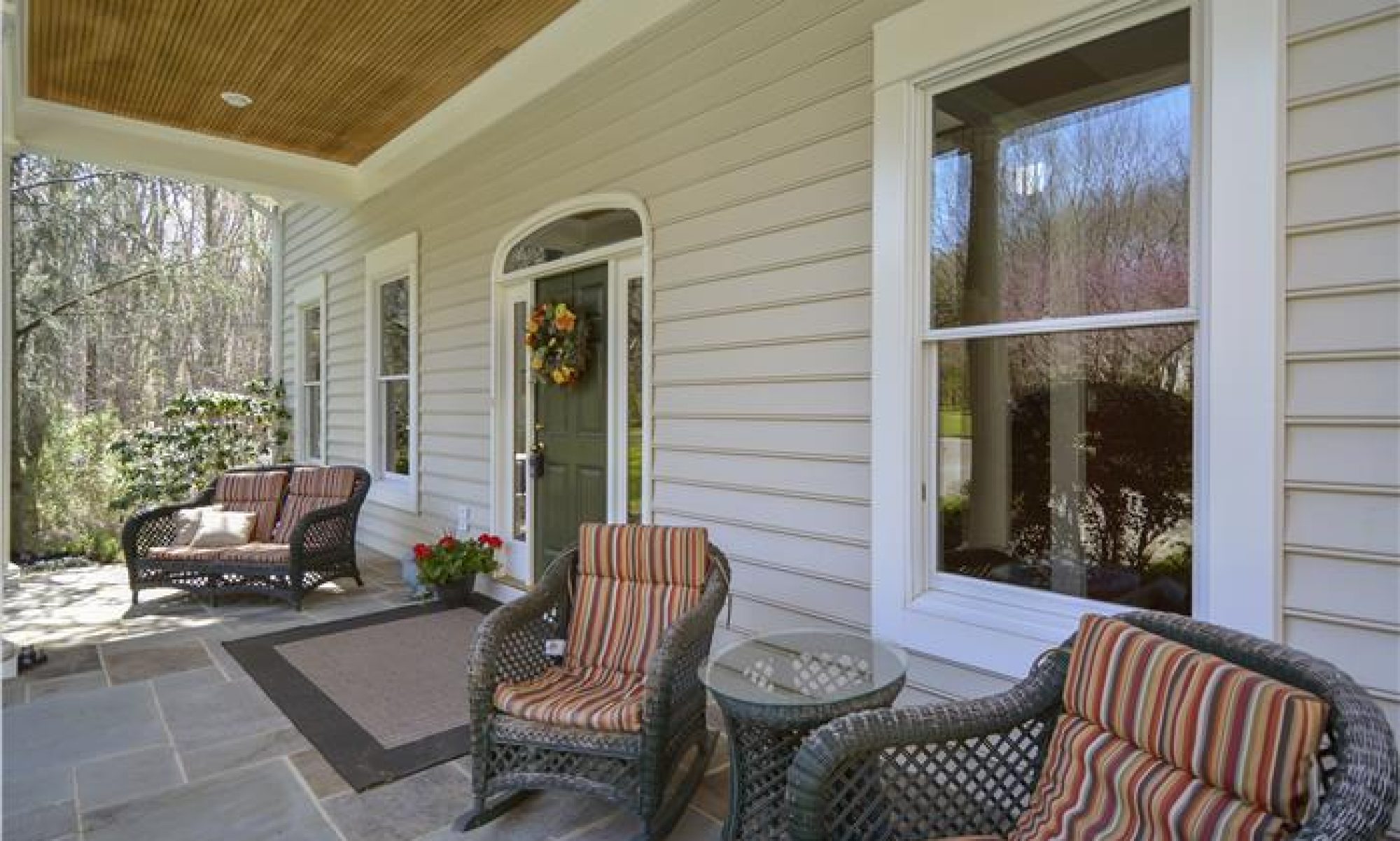
Although we’ve talked about your home’s interior – don’t neglect the exterior of your home. Home buyers’ initial opinions are created as they approach your home; no matter how nice your home looks on the inside, it may not matter if home buyers never make it inside. Simple landscaping can make a lawn appear “manicured.” Make sure that the home’s siding is clean and in good condition.

Your real estate agent should be able to provide guidance to prepare your home for sale. If home staging is a goal, many agents either work with a home stager or have been certified for home staging. You can also research home staging by visiting The International Association of Home Staging Professionals website (IAHSP.com).

More news and articles on “the Blog”
Protected by Copyscape Web Plagiarism Detector
This article is not intended to provide nor should it be relied upon for legal and financial advice. Using this article without permission is a violation of copyright laws. Copyright © 2013 Dan Krell.