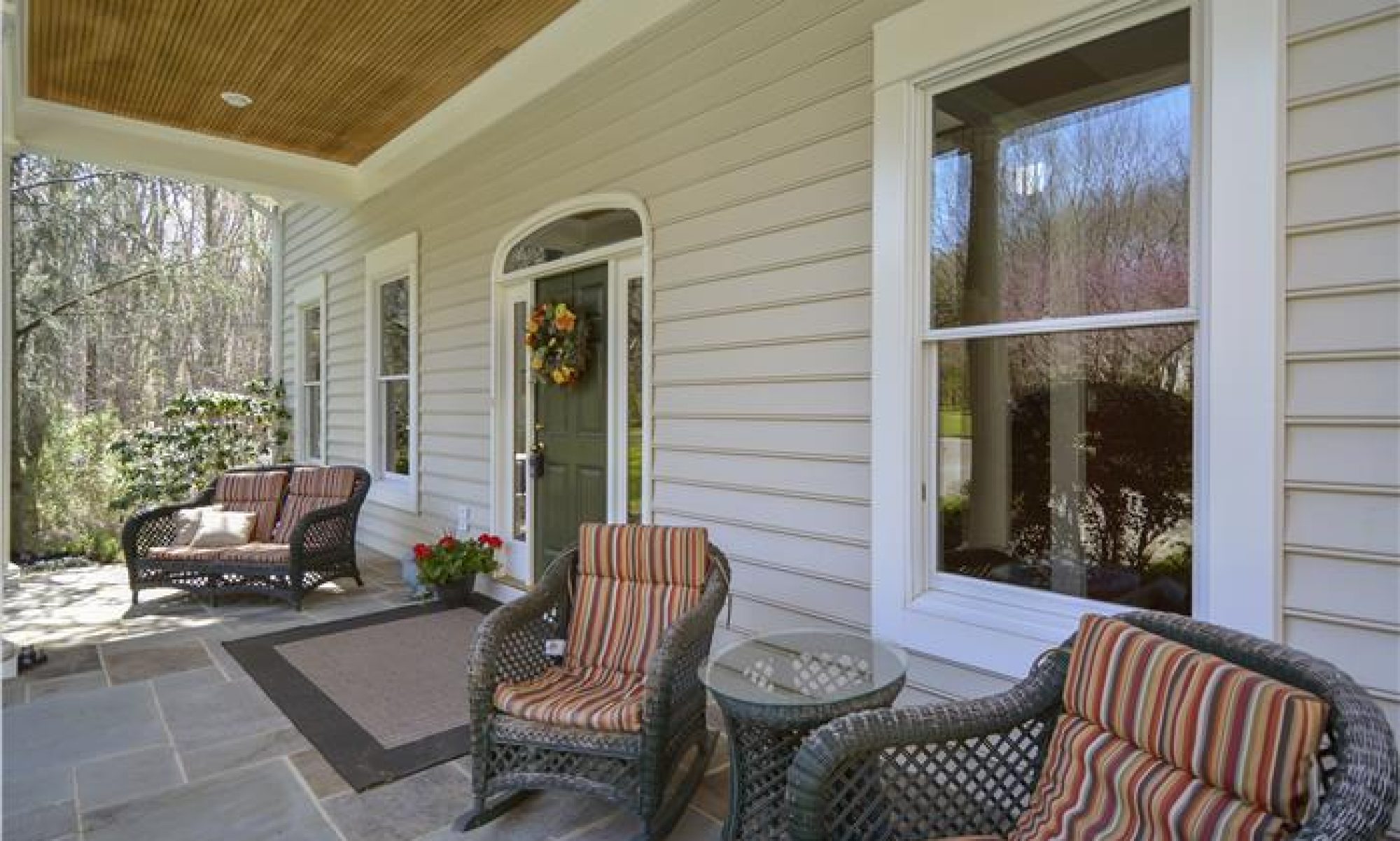
Picky home buyers and real estate slowdown

slowdown
Picky home buyers and housing slowdown

Why would a major real estate industry player predict a slowdown in home sales? The L.A. Times reported on May 5th (Real estate giant predicts slow home sales for months to come) that Realogy Holdings Corp, the parent company of Coldwell Banker, Century 21 and Sotheby’s, claims that a slowdown in mid and low bracket homes could hurt the brokerage business and could prove to be a difficult 2014.

Meanwhile, a recent “Real-Time Seller Survey” conducted by Redfin (refin.com) indicated that 52.4% of home sellers were confident about selling their homes; however 40.9% of sellers were concerned about affording their next home. This may be why 40.3% of those surveyed planned to price their home above market value – maybe not the best strategy. The May 8th Business Wire article (Redfin survey: 40% of home sellers plan to price higher than market value) quoted Redfin agent Paul Reid as saying; “Buyers this year are far less tolerant of overpricing, and homes that aren’t priced appropriately are likely to sit on the market until the seller is forced to reduce the price … Buyers often interpret a price drop as a sign there is something wrong with the home, leading some to negotiate even more aggressively or lose interest altogether.”

Economics aside, some experts say that a slowdown is in part due to institutional investors having all but left the market as distressed properties are decreasingly a part of the housing landscape; and the housing market is once again reliant on the owner occupant home buyer – who is often characterized as “picky.”

A lot has been said about “picky home buyers” since 2008, and the fact is that home buyers have not changed much – indeed, they may even be pickier today. It could be that the lessons of the financial crisis are still fresh in their minds; home buyers as group seem to be a hardy and savvy group. 2008 was a transition year, as home buyers shirked distressed properties for homes that exuded value. “Cheap” did not necessarily mean the home was a bargain to those who planned to be owner-occupants. Many home buyers were turned off to short sales and foreclosures, not just because of the process but because of the realization that the combined cost of the home purchase with repairs often exceeded the price of a re-sale that was in move-in condition.

Even though there is a perceived dearth of available homes for sale today, doesn’t mean that home buyers will pony up for an overpriced home. Home buyers are typically looking for a combination of location, quality, and value. According to Lyn Underwood (Home buyer turn-ons and turn-offs; McClatchy-Tribune Business News. April 26, 2014), home buyers are attracted to homes for a number of reasons; some of the top home characteristics include an updated kitchen with stone counters and maple cabinets; an open floor plan; new or refurbished wood floors; and flexible spaces (rooms that can be used for a number of uses).

If you’re selling this spring, don’t take home buyers for granted: don’t over price your home; and stay away from cheap renovations meant to look expensive (buyers are turned off by poor workmanship, sloppy installation, or inferior materials); and keep your home neat and tidy when showing. Your listing agent can provide guidance on preparing and pricing your home to sell in today’s market.

Original published at https://dankrell.com/blog/2014/05/15/picky-home-buyers-and-real-estate-slowdown/

Dan Krell ©
More news and articles on “the Blog”
Google+


Disclaimer. This article is not intended to provide nor should it be relied upon for legal and financial advice. Readers should not rely solely on the information contained herein, as it does not purport to be comprehensive or render specific advice. Readers should consult with an attorney regarding local real estate laws and customs as they vary by state and jurisdiction. This article was originally published the week of May 12, 2014 (Montgomery County Sentinel). Using this article without permission is a violation of copyright laws. Copyright © Dan Krell.

Challenges of selling a home during the summer

summer home sale

If you were selling your home several years ago, you might have been thinking of ideas how to attract home buyers to your home. Even though the feeling today is such that you don’t have to do much to sell your home, some home sellers are shocked to find out that there is more to selling today than just putting a sign up in the yard – and summertime selling poses additional challenges.

First, get the price right. As I wrote earlier this year, pricing a home is extremely important even when there appears to be a positive selling cycle. Even though you decide on the list price, you have to be realistic about your home’s value; your real estate agent can assist you in deciding on a list price by preparing a market analysis with recent (within the last six months) neighborhood homes that are comparable to yours.

Next, remember that de-cluttering is the foundation to your home’s presentation. Whether you are a pack rat or a neat freak, chances are that your home could use some de-cluttering. De-cluttering shouldn’t be thought of as getting rid of everything you don’t need in the home, but instead could be thought of as a way to neutralize and free up space to allow home buyers to imagine how they could live in the home.

Another factor to consider during a summer home sale is your home’s curb appeal. The basics of curb appeal include attending to the home’s landscaping and grading, siding, deck, driveway and sidewalks.

We tend to get lazy about tending to the yard during the hot and humid summer months; however, if you’re planning a summer sale, it is not the time to let the lawn and weeds overgrow. Simple landscaping can make your lawn appear manicured. Trees properly trimmed away from the home will allow your home to be seen from the street as well as not be “crowded” by overhanging limbs. Neatly trimmed and properly placed shrubs and flower beds will not only look beautiful, it will enhance your home’s façade. Also, check that the grading around your home diverts storm water away from the foundation. Hiring a professional landscaping company to tend to your yard is the way to go if the heat and/or activity pose a health hazard.

Take a close look at the exterior of the home. If the exterior does not need painting, look for areas that may be peeling or bare. Decks, fascia boards and window trim are often made of wood and typically need more attention (even if your siding is made of brick or artificial materials). Consider having the deck and siding power washed to remove dirt, algae or mold. Additionally, resealing the deck and other exterior wood trim enhances the home’s curb appeal.

Sidewalks and driveways are often given the short shrift. Cracked sidewalks and driveway are not only unsightly, they can also be a trip hazard. Repairing and/or sealing the walkways and driveway can not only increase safety – it can improve the appearance of your home.

Finally, how cool is your home? An air conditioning system that does not keep your home cool is a buyer deterrent – especially in the hot summer months. If you don’t have the air conditioning system serviced on a regular basis, you should consider doing so before listing your home this summer.

Protected by Copyscape Web Plagiarism Detector

by Dan Krell
Copyright © 2013

This article is not intended to provide nor should it be relied upon for legal and financial advice. Using this article without permission is a violation of copyright laws.

Amazon and real estate – will Bezos’ vision change marketing of home listings

twitter

homesThe big news this week is of course Jeff Bezos’ purchase of the Washington Post. Why would the man who predicted the demise print media pay $250 million for a regional newspaper and a handful of associated local papers?

If the real estate business is a window into how media plays a role in the daily lives of the average American, then Bezos’ purchase might be a head scratcher. Over the last five years, the National Association of Realtors® annual Profile of Home Buyers and Sellers (realtor.org) has demonstrated how the internet has increasingly played a role in how home buyers actively searched for homes. In 2007, the Profile of Home Buyers and Sellers indicated that about 60% of home buyers completely relied on the internet to search for their home, while about 21% did not use the internet at all in their search. Compare those statistics to the 2012 Profile, which reported that 90% of home buyers used the internet to search for homes; and home buyers who were younger than 44 years of age, the use of the internet is reported to be 96%!

It seems as if home buyers relied on the weekend real estate sections of the paper for a leg up on new home listings and open houses. Real estate agents and brokers happily paid to have their listings included in what seemed to be the weekly catalog of homes for sale. In addition to the home listings, print real estate sections also included other related information (such as decorating, renovation, and buying/selling tips).

However, as the NAR’s Profile of Home Buyers and Sellers indicated, there was a sharp increase in the reliance of the internet to search for homes from 2007 -2012. The time frame is no coincidence; besides the exponential increase in technology and computing power during this period, it also covers the housing bust and subsequent foreclosure crisis. This was a time of tight advertising budgets and the search for efficient advertising modes; the internet offered a bigger bang for the advertising dollar, offering a more robust real estate platform than print could ever offer.

And although there was a colossal increase in the reliance of the internet for real estate listing information in the last five years, there was a consolidation and reorganization of online real estate content during that time frame as well. As the housing market declined in 2007, many sites stopped syndicating their own content and instead partnered with one of the high profile, well organized real estate portals.

It might seem as if the purchase of the Washington Post by an internet visionary who had once foretold the death of printed news might be confusing. But if you understand the Amazon.com business model and how it revolutionized the purchase and delivery of print and recorded media, you would not speculate that the purchase of the venerable news organization was to expand an internet empire to the newsstand – but rather you might believe that the purchase was to acquire a widely recognized brand that generates a considerable amount of content that can be packaged and sold through Bezos’ established model.

Just as the internet revolutionized real estate content and home listings, you might imagine how Bezos’ novel news paradigm could increase the robustness of content and distribution of home and open house listings.

Protected by Copyscape Web Plagiarism Detector

This article is not intended to provide nor should it be relied upon for legal and financial advice. Using this article without permission is a violation of copyright laws.

By Dan Krell
Copyright © 2013

When is best time to sell a home

Housing Market

Buyers aren’t the only ones looking for a deal.  Home sellers are also looking for a good deal – which means they want to sell their home for the most money.  As it seemed as if the housing market had strong sales this year, some sellers are still trying to decide the best time to sell.  But unfortunately, timing the market may not be as easy as it seems.

Some say that spring is the best time of year to list and sell a home, while others believe that summer is better.  Old time real estate agents will tell you about a time when there was a traditional selling season, which basically started in March and ran through June.  In recent history, it seems as if the boom/bust market from 2005-2008 rewrote those rules.  During the “go-go” market, the spring selling season couldn’t start early enough; home buyers made their New Year’s resolutions and shook off the winter fog in early January to begin their home search.  For several years, it seemed as if home buyers started their real estate searching earlier each year to stake their claims on real estate before other buyers got wind of the listing.

However, once the bubble busted, home buyer activity significantly slowed, those who wanted to buy a home became increasingly methodical about their purchase as well as starting their search later in the year.  It seemed as if the best time to list and sell shifted from the spring time to summer months.

Since the downturn of the housing market, sales activity peaked in the summer months.  June has been a consistent contender for year high sale totals – until this year.  The July 22nd news release from the National Association of Realtors® (realtor.org) indicated that June sales “slipped” about 1.9% from May.  Granted, June’s sales are significantly higher than June of 2012, but the slowdown may just be a fluke or an indication of something else.

Maybe the combination of increased inventory (NAR reported that housing inventory was slightly elevated from May to about a 5.2 month supply) along with rising mortgage rates (Freddie Mac’s June national average commitment rate for a 30-year fixed rate mortgage rose to 4.07%) is making home buyers pause.

And surely home prices are making buyers have second thoughts; bargain hunters are having difficulty finding bargains.  June’s national median existing home sale price increased 13.5% compared to last June.  Distressed home sales, foreclosures and short sales that typically sell at lower prices, accounted for 15% of June’s figures (compared to last June’s 26%) and are at the lowest levels since 2008.  And although it may sound like great news, the double-digit jumps in the average home sale price may be a statistical artifact due to declining distressed home sales.

If you’re waiting to list your home for sale this year, you may have mistimed this year’s market.

Research has demonstrated that attempting to time the market may not always yield the best results – timing the market is much easier in hind sight.  Market timing appears to be much more than looking at selling activity cycles.  You should rely on the expertise of your real estate professional for neighborhood sales data and trends to assist you in deciding the price and the timing of listing and selling your home.

Protected by Copyscape Web Plagiarism Detector

This article is not intended to provide nor should it be relied upon for legal and financial advice. Using this article without permission is a violation of copyright laws.

By Dan Krell
Copyright © 2013

Handling home buyer feedback

home buyer feedbackYou’ve spent months preparing your home by de-cluttering, painting, and maybe even making renovations; the last thing you want to hear are objections from home buyers why the home is not suitable for them. Obviously, you’ve had years of enjoyment and you’re thinking about all the benefits the home offers. However, getting honest home buyer feedback when they visit your home is invaluable information to help get your home sold.

Asking for home buyer feedback is one of the tasks that your agent performs throughout the listing period. However, soliciting feedback from agents who bring buyers to your home is often hit or miss; although many agents offer good and honest feedback, just as many don’t respond (for various reasons) to feedback requests unless their buyers are interested in the home. Additionally, home buyer feedback is solicited when they visit open houses and includes questions such as: “What do you find most appealing about the home?”; “What do you find least appealing about the home?”; and “Is the home priced right?”

Ok, it’s nice to hear the good things people have to say about your home; these are obvious benefits and what others find appealing. Buyers may list various home features, upgrades, and/or renovations as appealing or beneficial; but it is also important to put weight on the negative feedback too. All the de-cluttering and neutralizing can make a home look good, but it may not change home features that do not fit other’s needs. Likewise, making cosmetic and minor repairs also increases your home’s appeal; but may not make obsolete systems acceptable.

One of the most common pieces of feedback you might encounter is about the home’s price. Since home buyers typically view similar homes, you get perspective about how you priced your home compared to other similar homes. If there is overwhelming feedback that the home is overpriced, then you should consider reviewing additional comps with your agent and correct the price as needed. It is also not uncommon that buyers may feel that the home is priced well, but for various reasons they are not interested in making an offer.

Keep in mind that the feedback you will receive is subjective and offered from various points of view, so don’t be surprised with seemingly contradictory objections from different home buyers. Some objections can be addressed readily while others cannot.

For example, objections about the size and/or location of the home or yard are not easily overcome; and it may be that buyers offering such objections are looking at the wrong home. However, objections about shabby flooring or lack of updates can be addressed by either taking action or changing the list price to reflect the home’s condition.

Sometimes in pushing their client’s limits, home buyer’s objections may actually be a commentary on their limitations rather than the home’s attributes. In the hopes of getting a great deal, buyers are taken to view homes that are out of their price range and/or in need of updates they cannot make.

Buyer and agent feedback is the easiest way to gauge how your home is positioned in comparison to your competition on the market. Clearly, the home’s positive attributes and benefits should be highlighted as these items would be appealing to home buyers. However, buyer objections should also be considered and addressed if possible to help facilitate a sale.

Original located at https://dankrell.com/blog/2013/05/31/handling-buyer-feedback-and-objection-for-home-sellers/

By Dan Krell

This article is not intended to provide nor should it be relied upon for legal and financial advice.  Using this article without permission is a violation of copyright laws. Copyright © 2013 Dan Krell.