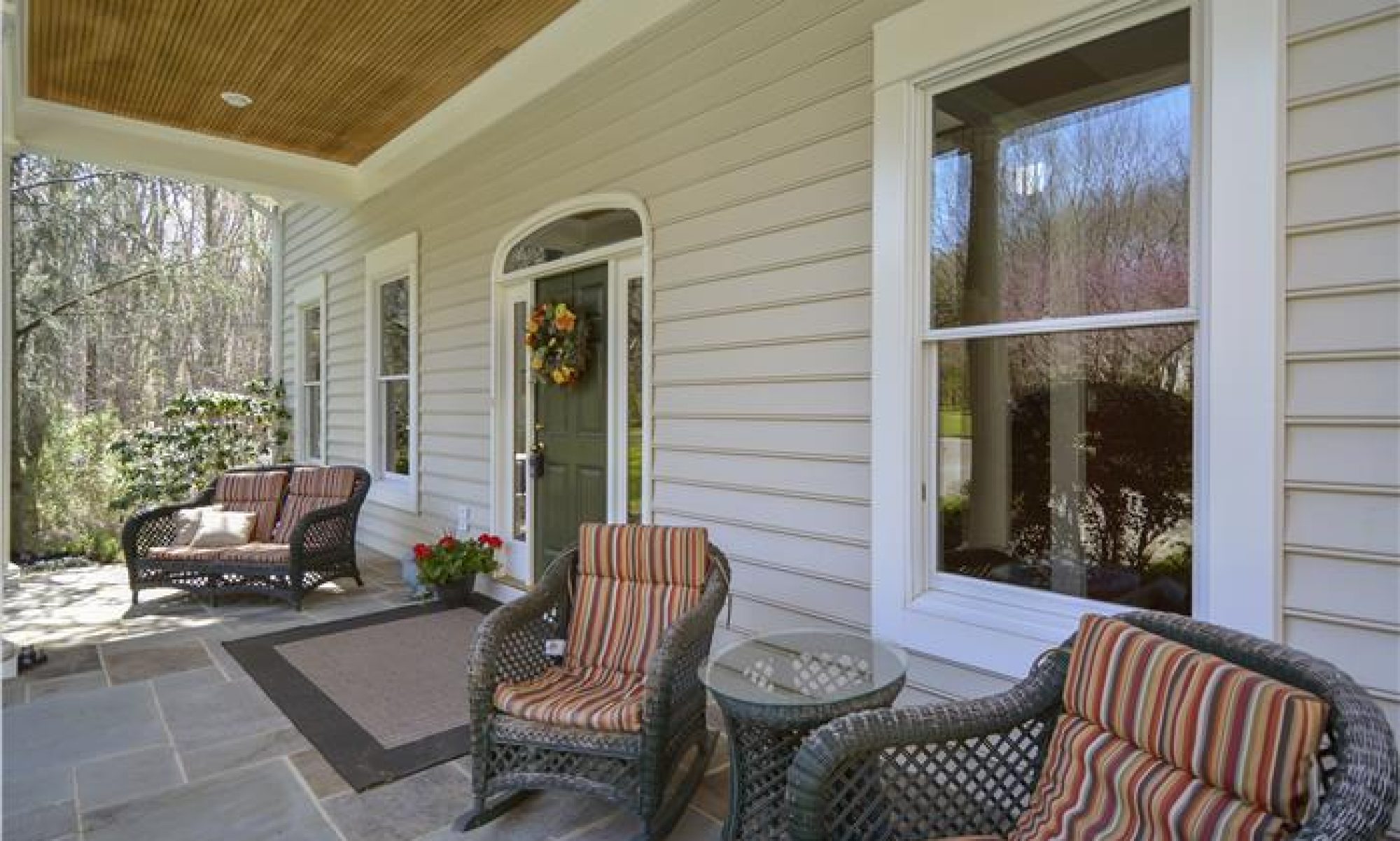
Best home sale?

best home sale
Best way to sell a home? (infographic from keepingcurrentmatters.com)

As the housing market strengthens, consumer confidence in real estate increases.  Along with a stronger home sale market comes the increase of for-sale-by-owners (FSBO).  The obvious upside to selling a home on your own is to increase your net.  And a study conducted in 2009 may support your FSBO yearnings. But is FSBO the best home sale?

Research conducted by Hendel, Nevo, and Ortalo-Magné (2009; The Relative Performance of Real Estate Marketing Platforms: MLS versus FSBOMadison.com; American Economic Review; 99:1878-98) found that homes that sold on a FSBO website sold for as much as homes that were listed in the MLS.  However, homes that sold on the MLS did so with significantly fewer days on market.  The authors also found that a significantly higher proportion of home buyers bought homes listed on the MLS.  The research concluded that “FSBO attracts a particular type of seller…” A FSBO seller is very patient to wait for someone to pay for their higher priced home.

The research conclusion about sale price is contrary to annual surveys reported by the National Association of Realtors.  For example, the National Association of Realtor’s 2015 Profile of Home Buyers and Sellers reported that the average home sale price for a FSBO was $185,000, while the average home sale price for an agent assisted home sale was $240,000.  Of course, the 2009 research indicated that homes that did not sell on the FSBO website were promptly sold on the MLS.  Besides being limited to a specific market, excluding “failed” FSBO sales from their data set could have skewed results and could explain 2009 study’s conclusion about sale prices. From NAR’s Field Guide to Quick Real Estate Statistics:

For Sale By Owner (FSBO) Statistics

  • FSBOs accounted for 8% of home sales in 2015. The typical FSBO home sold for $185,000 compared to $240,000 for agent-assisted home sales.
  • Most difficult tasks for FSBO sellers:
    • Getting the right price: 18%
    • Preparing/fixing up home for sale: 13%
    • Understanding and performing paperwork: 12%
    • Selling within the planned length of time: 3%
    • Having enough time to devote to all aspects of the sale: 3%

Going FSBO sounds simple and maybe the best home sale; but going it alone is not for everyone.  Selling a home is much more than putting a sign in the yard – especially if you are demanding top dollar.  Take your efforts up a notch to increase the probability of realizing your sales goal.  Among the many tasks that are essential for a successful home sale, consider a basic marketing plan.  Attract more buyers with professional high quality photos.  Prepare for buyers to visit your home by decluttering and making minor repairs.  You should also have a contract ready in case there is no buyer agent.  Even though you are selling FSBO, you still have to comply with federal, state, and local disclosure laws.  Be prepared for the details of the transaction, which include: negotiating home inspection repairs; providing sale comps to appraiser; dealing with the buyer’s lender and title company.

If going FSBO is intimidating, consider hiring a real estate agent that offers à-la-carte services.  The agent can assist you in many areas of your sale, only charging you for the pieces you need.  You can even pay a flat fee for a MLS placement of your sale.

If you’re like many FSBO’s, you’ll realize the value of a Realtor.  Real estate agents are housing and marketing experts that can assist you in setting a realistic sale price.  Besides freeing up your time, experienced agents can facilitate offers and are expert negotiators.  They know of latest home sale trends and are aware of any new legislation that can affect your sale.

The best home sale

You may find selling FSBO attractive.  But selling a home is in the details that are executed throughout the transaction.  The best home sale may actually be through a Realtor.  The research supports the notion that hiring a Realtor can provide a more successful and satisfying home sale than doing it FSBO.

As I wrote about FSBO’s in 2005:

How much money can you realistically save? …there as been a trend of negotiated commissions, so actual savings for a FSBO have been reduced….Additionally, FSBO’s are contracting and paying commission with more Realtors and their homebuyers in this environment of limited home inventory. In the end, the FSBO’s savings from Realtor commissions may be marginal.

… there are some real negative aspects of selling your home FSBO, such as time, expense, and contractual obligations.

How much is your time worth? Selling a home requires the application of time to tasks. Among the many tasks of selling a home, the top things that a FSBO may do include (and is not limited to) preparing the home for the open house, contacting the paper to advertise, putting up signs, meeting potential homebuyers, and negotiating contracts. The time quickly adds up.

Selling your home FSBO is supposed to save you money right? Well, there is a bit of expense that is necessary. A FSBO must have signs in the yard, as well as directionals (the small arrow signs) to point homebuyers in your direction. Additionally, you might consider paying the local paper for advertising, as well as paying for an internet advertisement (although there are many websites that will allow you to post for free). Another expense may be to have your attorney to prepare and review the contract…. It seems that the expenses also quickly add up.

…even FSBO’s are responsible to adhere to certain federal and local laws pertaining to the sale of real estate (i.e., equal housing, lead paint, Maryland disclaimer-disclosure, etc). This is the one area that FSBO’s get themselves in trouble because of the lack of knowledge and expertise. There is an increased liability potential.

Copyright © Dan Krell
Google+

If you like this post, do not copy; instead please:
reference the article,
like it at facebook
or re-tweet.

Protected by Copyscape Web Plagiarism Detector
Disclaimer. This article is not intended to provide nor should it be relied upon for legal and financial advice. Readers should not rely solely on the information contained herein, as it does not purport to be comprehensive or render specific advice. Readers should consult with an attorney regarding local real estate laws and customs as they vary by state and jurisdiction. Using this article without permission is a violation of copyright laws.

Greedy home seller tips

Don't be a greedy home seller
Pricing Strategy for a Home Sale (infographic from forsalebyowner.com)

When there is a buzz about home sellers being greedy, you know home sales are doing well.  So, not surprisingly, along with last year’s record home sales came the reports of greedy home sellers.  Are you a greedy home seller?  Or are you adjusting to a market where home prices are increasing?

Greed has developed a bad rap.  Surely there is an evolutionary basis for greed.  Many believe that early hominids promoted personal and group survival by being “greedy” (although disputed by some).  Those who hoarded food, so as to have more than enough, lived through difficult winters and droughts. During times of financial prosperity, greed is looked upon favorably.  However, in the aftermath of a recession, greed is thought of as the basis for fiscal calamity.  Immortalized in Gordon Geckko’s famous “greed is good” speech in the 1987 movie Wall Street, “greed” is a cinematic vehicle to show the fine line between a healthy desire to prosper and a corrupt drive to have more than enough.

Avoid being viewed as a greedy home seller by creating a realistic pricing strategy.  Creating a pricing strategy is an art and a science.  When selling a home, you have to determine the list price.  There are many factors to consider besides recent neighborhood sales, such as condition of your home, sales trends, mortgage interest rates, economic trends, etc.  Like other home sellers, you fall into a conundrum.  If you price your home too high, then it will limit potential home buyers who visit.  However, if you price your home too low to increase home buyer interest, you may not get the price you want.

Contrary to some assertions that a home’s list price doesn’t play a role in the sale, there is evidence to suggest that it really does matter.  Lu Han and William C. Strange determined that a lower list price does increase home buyer visits – but only to a point (What is the Role of the Asking Price for a House? University of Toronto, Rotman School of Management; 2012).  They concluded that there is a point at which the home price is perceived to attract too much buyer competition, which may turn off other home buyers.  Furthermore, their data shows that there is a negative relationship between a list price and the number of home buyers: meaning that the higher the list price relative to the neighborhood, the lower number of home buyer visits, and vice-versa.

If you fear being a greedy home seller by asking for a high price for your home, there is research to suggest that you’ll let go of the greed in order to make a deal.  A 2013 study by Nuno T. Magessi and Luis Antunes looked at how the emotions of fear and greed compete internally (Agent’s fear monitors the spread of greed in a social network; Proceedings of the 11th European Workshop on Multi‐Agent Systems EUMAS, 12-13).  They concluded that greed is mitigated by the fear of loss within the confines of a social network.  When applied to a home sale, the fear of not selling a home competes with the impulse to hold out for the high price.  Deducing further, there is a need to fit within one’s social network by trying to sell a home for the most money, and yet avoid the stigma of a failed home sale.

Don’t be a greedy home seller. RealtorMag described three common home seller mistakes in a 2015 post (3 Mistakes Sellers Often Make; realtormag.realtor.org; April 12, 2015).  Included were “Not being honest with the home’s history,” “Not making a better home presentation,” and “Being unrealistic about the home’s value.”  About unrealistic home value, it was said:

“…Despite tight inventories of homes for-sale in many markets, sellers still need to be careful not to get too greedy with their list price, say real estate professionals…Home owners tend to get a much lower price when they overprice a home at the onset and then drop the price several times. The longer the home lingers on a market, the more likely it will receive a deeper discount…”

If your home doesn’t sell, you must examine your pricing strategy.  Was the price realistic, or were you too greedy?

Original published at https://dankrell.com/blog/2017/01/06/greedy-home-seller/

Copyright © Dan Krell
Google+

If you like this post, do not copy; instead please:
reference the article,
like it at facebook
or re-tweet.


Disclaimer. This article is not intended to provide nor should it be relied upon for legal and financial advice. Readers should not rely solely on the information contained herein, as it does not purport to be comprehensive or render specific advice. Readers should consult with an attorney regarding local real estate laws and customs as they vary by state and jurisdiction. Using this article without permission is a violation of copyright laws.

A hot winter housing market

winter housing market
Winter housing market (infographic from househunt.com)

Winter is not usually a time of year when you would think of selling your home.  After all, everyone gets into holiday and hibernation mode.  Between Thanksgiving and New Year’s Day (during the winter housing market), home sale inventory is usually trimmed by an average of 50 percent and contract activity is significantly reduced.

But this winter will be different.  Rising interest rates and pent up demand could make the housing market very active this winter.

Consider that mortgage interest rates are on their way up.  Freddie Mac (freddiemac.com) reported last week about a mortgage interest “spike” that can get fence-sitters to jump into the winter housing market.  The rate for the 30-year-fixed-rate mortgage averaged 3.94 percent, which jumped from the prior week’s average of 3.57 percent.  On the face of it, the increase doesn’t seem significant.  But the difference is about $70 per month on a $300,000 mortgage.

Last week’s interest rate surge could be the beginning of interest rate increases we’ve been anticipating (for five years).  Speculation is that the bond market is anticipating and pricing in a Fed interest rate hike at next month’s Open Market Committee meeting.  Of course, the next sixty days could be a lead up to new mortgage rate expectations, which could exceed 4.5 percent by the end of next year.

Historically low interest rates for a 30-year-fixed-rate mortgage have become part of our lives.  Upward movement will be met with hyperbole and excitement from the media, claiming reduced home sales and a faltering real estate market.  However, let’s put it in perspective.  Mortgage rates averaged above 4 percent throughout 2014.  The last time we had an average mortgage rate above 5 percent was 2010.  In fact, the average mortgage rate at the height of the go-go market during 2006 was above 6 percent.

What does it mean for you if you’re planning a sale?  Don’t wait until spring!  Consider selling during the winter housing market.  You won’t have much competition; and serious home buyers, who are sensitive to interest rates, will be looking through the holidays and winter.

If you decide to sell during the holidays and the winter housing market, make sure your home is ready. Decluttering is the most important aspect of home preparation.  However, winter decluttering may be more difficult because of the colder weather and our desire to slow down during these months.  Besides our inclination to “nest,” it’s easy to accumulate items in the house that make us cozy and comfortable.  But winter clutter can be minimized by organization and a daily straightening-up for incoming buyers.

Check your home’s systems.  Have licensed professionals inspect your furnace and roof.  Besides keeping the house warm and dry for buyers who visit, checking these systems can prevent surprises when a home inspection is performed.

After a weather event, clear your walkways and driveway of ice and snow.  Besides making it easier for home buyers to visit your home, it lessens the possibility of someone falling and getting hurt.

If your home is vacant, have a licensed professional winterize it. Winterizing your home can reduce the risk of bursting pipes and damaging plumbing fixtures.  If you are out of town, have a trusted person check on the home regularly (even if you are listed with a real estate agent).  Your “stand-in” should also be available to take care of any house related issues that occur in your absence during the winter housing market.

By Dan Krell
Copyright © 2016

If you like this post, do not copy; instead please:
reference the article,
like it at facebook
or re-tweet.

Protected by Copyscape Web Plagiarism Detector


Disclaimer. This article is not intended to provide nor should it be relied upon for legal and financial advice. Readers should not rely solely on the information contained herein, as it does not purport to be comprehensive or render specific advice. Readers should consult with an attorney regarding local real estate laws and customs as they vary by state and jurisdiction. Using this article without permission is a violation of copyright laws.

Think resale when home buying

A common question, especially among savvy first time home buyers, is what will the resale value be like when they sell?  Of course they are not asking for a specific price, but rather they question if the future home buyer will find the home just as desirable as they do. In other words, think resale when home buying.

That is a good question, since your home is one of the largest investments you’ll ever make; and you want to make sure you’re making a sound investment.  Some things to keep in mind when buying a home and keeping an eye to the resale includes: focusing on current desirability; keeping the home complimentary to the neighborhood; considering added value; and not going overboard with updates and upgrades.

Ask yourself what attracted you to the home you’re purchasing and you’ll have a number of items that probably will make it desirable to the future home buyer.  Most likely at the top of the list is the location.  “Location, location, location” may be cliché, but it holds true.  Items such as the home’s accessibility to metro and major commuter routes are important, along with its proximity to neighborhood and local amenities.  Other top attractors to the home possibly include the living space and back yard.

Consider the future plans for the area, as it could affect the home’s resale.  You can view the master plan for the county and specific localities on the Maryland-National Capital Park and Planning Commission’s website (montgomeryplanning.org).  You can decide if the home you’re about to buy will be impacted by some future development or zoning change.

Another resale factor is how the home compares to its neighborhood cohorts.  Is the home similar or does it obviously different?  Has the current owner modified the existing living space in any way?  Have they converted a three-bedroom home into a two-bedroom home; or similarly, added a bedroom by taking space from an existing bedroom or living area?  Such modifications can make the home feel cramped and smaller and affect future resale.

Think about how the home seller updated and upgraded the home.  Although not all updates add value, many will increase the home’s appeal to buyers.  Keep an eye on the kitchen, bathrooms, and flooring, as home buyers typically consider these as high cost upgrades and can affect resale value.  Ask the seller if they hired licensed contractors for major renovations and additions.  Also, check for appropriate permits, and ask for plans and invoices.

Additionally, do your due diligence when it comes to “green” upgrades.  Although the home seller may have considered the investment into green upgrades money saving, they are not always reliable and can be expensive to repair.  And it may be all the rage among home owners, solar panels may come with lease payments and/or replacement costs with little or no net savings; so it’s a good idea to ask for associated lease agreements and utility bills, as well as replacement and maintenance costs.

When it comes time for you to sell, don’t go overboard when with updates and upgrades.  Contrary to belief, doing too much to the home could have a minimal return on your investment, or even decrease the value.  Updates and upgrades should be comparable to similar homes in the price range to maximize return on your investment. Also, steer clear from short lived trendy designs.  Experts recommend to focus on function and substance when making upgrades.

By Dan Krell
Copyright © 2016

If you like this post, do not copy; instead please:
reference the article,
like it at facebook
or re-tweet.

Protected by Copyscape Web Plagiarism Detector


Disclaimer. This article is not intended to provide nor should it be relied upon for legal and financial advice. Readers should not rely solely on the information contained herein, as it does not purport to be comprehensive or render specific advice. Readers should consult with an attorney regarding local real estate laws and customs as they vary by state and jurisdiction. Using this article without permission is a violation of copyright laws.

Home selling don’ts

When preparing for a home sale, the devil is in the detail.  You probably already know about the “do’s,” de-cluttering, curb-appeal, staging, and making necessary repairs.  But here are a few home selling “don’ts” that often trap home sellers into making mistakes:

Home selling is not about you. Don’t make a statement.  Now is not the time to be bold with renovations and staging; but rather stay focused on getting your home sold.  Stay away from trendy features, and bold designs.  Although bright and dramatic colors seem tempting, stick with neutral color schemes.  Besides making rooms feel awkward, making a statement with trendy fixtures and bold colors may turn off home buyers.  Bold style statements make home buyers fixate on the style, rather the space and potential of each room.

Home selling is not about being cheap. Don’t hire a contractor because they are the cheapest.  When it comes to home repair, the idiom “you get what you pay for” typically holds true.  Home buyers have a discerning eye and can spot poor workmanship.  Don’t be tempted to hire the unlicensed handyman to save a few dollars either; you and the future buyers won’t have recourse if there is a problem with the repair.  Don’t also be talked into a cheap renovation that is meant to appear as a luxury amenity.  Poor workmanship, sloppy installation, and/or inferior materials will turn away many home buyers.

Home selling is not about being amateur. Don’t assume all house painters are alike.  A good paint job can make a room look terrific and create positive emotions; while a poor paint job makes a room appear shabby and unstylish.  And even though you may be tempted to save a few dollars, don’t paint your home on your own – hire a professional.  The amateur paint job appears sloppy and has the telltale uneven edges, painted over light switches and receptacle covers, and painted shut windows.

Home selling is not about guessing. Don’t assume your prepping will bring you a big return on your investment.  If you deferred regular maintenance, you may have to make repairs regardless of the return.  Likewise, if your home is outdated, you may consider making some updates to lure home buyers.  Before getting in too deep on a prepping project, have a budget in mind and do a cost benefit analysis.

Consider checking out this year’s Remodeling Magazine’s Cost vs. Value Report (costvsvalue.com) to find out what updates and renovations make sense and which ones can bring you the biggest returns.  Although most renovations won’t bring you a dollar-for-dollar return, they may add to the overall aesthetic and make your home more appealing.  However, some renovations may not only lose money but can also blemish your otherwise beautiful home.  For example, adding a backup generator may seem as if it is a much needed amenity, however, the report indicated that for the Washington DC region, you would only recoup about 57.5% of the cost.  And it is possible that the home buyer will remove it because of it was poorly installed and too noisy.

The purpose of preparing your home before a sale is to not only to compel home buyers to make a top-dollar offer on your home, but to also get it sold quickly.  Consider planning out how you will prepare your home. Do the research.  Don’t fall into the traps that ensnare many home sellers because it can cost you. You may not only have to correct poor workmanship, but your negotiated sale price may be lower than expected.

By Dan Krell
Copyright © 2016

If you like this post, do not copy; instead please:
reference the article,
like it at facebook
or re-tweet.

Protected by Copyscape Web Plagiarism Detector


Disclaimer. This article is not intended to provide nor should it be relied upon for legal and financial advice. Readers should not rely solely on the information contained herein, as it does not purport to be comprehensive or render specific advice. Readers should consult with an attorney regarding local real estate laws and customs as they vary by state and jurisdiction. Using this article without permission is a violation of copyright laws.