Home listing syndication is big business

home listing syndication
Home listing syndication (infographic via trendmls.com)

Your home listing is a hot commodity!  Not just to home buyers looking to buy, but to those who buy and sell information on the internet.  MLS home listing information syndication is big business.

Much of what you see, hear, and read on TV, radio, and the internet is syndicated and distributed through a broad network of affiliated outlets.  The purpose is to have as large of an audience as possible.  The larger the audience, the larger the advertising revenue.  Syndicating and distributing media content has been around for a very long time, and has been very a lucrative industry for those involved.

Internet syndication is no different and has become sophisticated, such that websites will pay for licensed content.  The content attracts visitors and generates revenue via ads and/or pay-per-click.  Needless to say, internet syndication has developed to become a multi-billion-dollar industry.

When you think about making money in real estate, you probably think about buying and selling property, not the internet.  Most people don’t realize that real estate information generates $billions on the internet.  Real estate portals generate revenue by publishing content that attracts home buyers and sellers.  The sought after content, of course, is your home’s MLS listing.  Websites generate income by selling real estate and other professionals access to consumers who visit their sites to view your MLS listing.

You may not know this, but your home’s listing is copyright-protected by your agent’s Multiple Listing Service.  The content is licensed and syndicated to internet real estate portals and other publishers for a fee.  How much do websites pay for MLS licensed content?  Heck, you’d be hard pressed to find that information, much less acknowledgement that there is a fee paid at all!  And I suspect that information is not readily disclosed because consumers would be up in arms if they knew.

However, an article by Natalie Sherman appeared in the Baltimore Sun on January 27, 2015 (MRIS looks to partner with Zillow) gives a hint about the monetary relationship between MLS boards, syndicators and publishers.  Ms. Sherman wrote:

“Under the current system, Zillow pays to receive listings from Listhub.com, which has agreements with hundreds of multiple listing services, including MRIS, to provide syndication services to sites such as Zillow. Earlier this month, Zillow and Listhub said their existing deal would not be renewed.

A representative for Zillow, which has been working to establish more direct relationships with brokers and listing services for years, said a new deal would help keep the site more up to date.”

The article refers to the 2015 shakeup of real estate listing feeds to specific websites, such as Zillow.  At that time, Zillow sought direct deals with individual MLS boards, such as our local MRIS (now part of Bright MLS), to get MLS home listing feeds.

Chances are that you are unaware that the information about your home that is uploaded to the local MLS (including pictures of your home) become the property of the MLS.  Much less, you may not know that the information is licensed to others for a fee to be used on other websites.

Even though the MLS boards charge subscription fees to agents for the privilege of uploading and viewing content, they might argue that the fees generated by licensing and selling your information helps maintain the MLS system.  However, not disclosing this aspect of the real estate listing poses some ethical questions that must be addressed.

Of course, there are real estate brokers who have opted-out of syndication of their MLS listings.  These brokers want to retain control of  home listing information to ensure accuracy and maintain professionalism when presenting your home to the public.

Copyright© Dan Krell
Google+

If you like this post, do not copy; instead please:
link to the article,
like it at facebook
or re-tweet.

Protected by Copyscape Web Plagiarism Detector
Disclaimer. This article is not intended to provide nor should it be relied upon for legal and financial advice. Readers should not rely solely on the information contained herein, as it does not purport to be comprehensive or render specific advice. Readers should consult with an attorney regarding local real estate laws and customs as they vary by state and jurisdiction. Using this article without permission is a violation of copyright laws.

Gonzo home sales and prices

Everyone seems to be excited about this week’s Case-Shiller home price numbers reported for February.  Even the title of the April 25th press release sounded a little giddy: “The S&P Corelogic Case-Shiller National Home Price NSA Index Sets Fourth Consecutive All-Time High” (spindices.com).  Yes, the Case-Shiller 10-city and 20-city composite indices are close to the 2007 level.  But before you become intoxicated by reports of gonzo home sales and prices and run off to sell your home, here’s more to the story.

Gonzo home sales and prices

Gonzo home sales and prices depend on the market.  According to the recent Case-Shiller release, Seattle, Portland, and Dallas topped the charts with annual index gains of 12.2 percent, 9.7 percent, and 8.8 percent respectively.  Not surprisingly, Seattle and Portland have been the hottest real estate markets over the past year.  Tampa’s and Cleveland’s housing markets are at the opposite end of the spectrum with decreases of -0.5 percent, -0.3 percent during February; while Miami’s home price index was unchanged.  Washington DC reported an annual gain of 4.1 percent, with a 0.2% gain reported in February.

David M. Blitzer, Managing Director and Chairman of the Index Committee at S&P Dow Jones Indices stated:

“There are still relatively few existing homes listed for sale and the small 3.8 month supply is supporting the recent price increases. Housing affordability has declined since 2012 as the pressure of higher prices has been a larger factor than stable to lower mortgage rates.

Housing’s strength and home building are important contributors to the economic recovery. Housing starts bottomed in March 2009 and, with a few bumps, have advanced over the last eight years. New home construction is now close to a normal pace of about 1.2 million units annually, of which around 800,000 are single family homes. Most housing rebounds following a recession only last for a year or so. The notable exception was the boom that set the stage for the bubble. Housing starts bottomed in 1991, drove through the 2000-2001 recession, and peaked in 2005 after a 14-year run.”

Gonzo home sales and prices are dependent on local real estate.  It’s true, housing inventory is lacking.  At a time when homes should be coming to market for the spring season, the Greater Capital Area Association of Realtors Montgomery County single family statistics for March 2017 indicated that there were -1.8 percent less new listings compared to the same time last year.  And the total number of active homes for sale are -16.4 percent less than the same time last year.  Although June is usually the peak time for home sales and prices in our area, home sales increased 17.9 percent month over month, and is 11.7 percent higher than the same time last year; while average home sale prices increased less than 1 percent (gcaar.com)!

Holy shades of 2005, Batman!

Housing stats sound eerily like those before the housing bubble crash.  But this market is different in many respects.  Consider that housing speculation is not as prevalent as it was at that time; homes are not being flipped in a matter of days in most areas.  And home buyers are more sophisticated and savvy than they were in 2005; home buyers are more demanding, as well as sensitive to home condition and price.

Yes, it’s true that house values are increasing.  Yes, home sales are breaking records.  But not all homes sell.  You should realize that that home sale stats includes data of homes that sell.  Homes that don’t sell are not included in the numbers of closings, nor are they included in home sale prices.

Homes that don’t sell tend to be overpriced for the home’s condition, or neighborhood.  Sometimes, the physical location of the house is not ideal; for example, situated next to train tracks.  If you’re selling your home this year, don’t get greedy.  Get a professional opinion on pricing your home correctly; over priced homes tend to not sell quickly, or not at all.

Pricing your home may not be as easy as you think.  Empirical research has confirmed that there are many variables that affect sales price.  Factors that impact home sale price include the home’s location, condition, amenities, and market timing.

If you want to sell your home quickly and capitalize on home sale trends: consider repairing deferred maintenance issues, making updates, and don’t take home buyers for granted.  When making repairs and updates, don’t go for the cheapest quote because it will likely show.  Also, make sure your contractors are licensed.

Home buyers are just as savvy as you, so any attempt to deceive will backfire and hurt your sale.  Focus on broadening your home’s appeal.  Consider making your home turnkey, since most home buyers are looking for a home they can move right in and without making immediate repairs and updates.

For a guide on a successful home sale, take a look at “The magic of 4 to sell a home

By Dan Krell
Copyright© 2017

Original post at https://dankrell.com/blog/2017/04/28/gonzo-home-sales-prices/

If you like this post, do not copy; instead please:
link to the article,
like it at facebook
or re-tweet.

Protected by Copyscape Web Plagiarism Detector


Disclaimer. This article is not intended to provide nor should it be relied upon for legal and financial advice. Readers should not rely solely on the information contained herein, as it does not purport to be comprehensive or render specific advice. Readers should consult with an attorney regarding local real estate laws and customs as they vary by state and jurisdiction. Using this article without permission is a violation of copyright laws.

Curb appeal can boost home sale price

If you want to increase the sale price of your home this spring, you will no doubt focus on the interior.  But how does the home’s exterior look?  You’d be surprised about the amount of necessary cleaning, decluttering and repairing around the exterior of your home.  But don’t skimp on the exterior home preparations before your sale – research conclusively shows that improving your home’s curb appeal can increase the sale price by as much as 8 percent!

An empirical study conducted by Chen, Evans-Cowley, Rutherford, and Stanley (An Empirical Analysis of Effect of Housing Curb Appeal on Sales Price of Newer Houses. International Research Journal of Applied Finance. 2013, Vol. 4 No 11, p1407-1419) was the first to demonstrate the relationship between a home’s sale price and curb appeal.  The authors also discussed how home buyers’ preferences in a home’s exterior influence the home’s sale price.  Besides curb appeal, they suggest that the home’s architectural elements could also be important in the final sale price.  The idea that today’s modern designs are more desirable, and likewise costs more money, is only transitory; such that today’s designs could become trite and tired in twenty years.

The study used a seven-point “attractiveness” scale to determine how respondents viewed the attractiveness of a home’s exterior.  They concluded that there is a relationship between a home’s exterior attractiveness and the home’s sale price.  In fact, they reported that a one-point increase in their scale corresponded to an 8 percent increase in the home’s value!

Home buyers make assumptions about your home’s interior based on the appearance of the exterior.  An unattractive exterior can repel home buyers before they even see the beautiful and updated interior.  Attract home buyers and boost your home sale price by focusing on cleaning, repairing, and “finishing” your home’s exterior.

Basic landscaping can make a huge difference in your home’s attractiveness.  Having too many plants, or letting them grow too much can make the home’s exterior appear crowded and unkempt.  Make sure your lawn is full but manicured throughout your listing.  Properly trimmed trees not only look tidy, but allow home buyers to see your home from the street.  Appropriately placed and trimmed shrubs and flower beds can accent the home’s architectural design.

Check your home’s siding.  Replace and repair any missing or broken siding pieces.  Freshen up siding by power cleaning, or painting.  Even if your home has artificial materials as siding, inspect window frames and fascia boards; these areas are often neglected and may need urgent repair.

How does the deck look?  Unless you maintain the deck regularly, chances are it may seem dull and tired, and may need to be re-treated.  Even if your deck is made of artificial decking, check the railings.  Hire a licensed contractor to repair and secure the deck as necessary.

How about the sidewalks and patio?  The sidewalk and patio can be easily cleaned by power washing.  Cracks in the sidewalk and patio are not only unsightly, but can be a trip hazard.  Cracks are typically caused by rain and water runoff, but can be repaired.  Consider also sealing the sidewalk and patio to prevent further water damage.

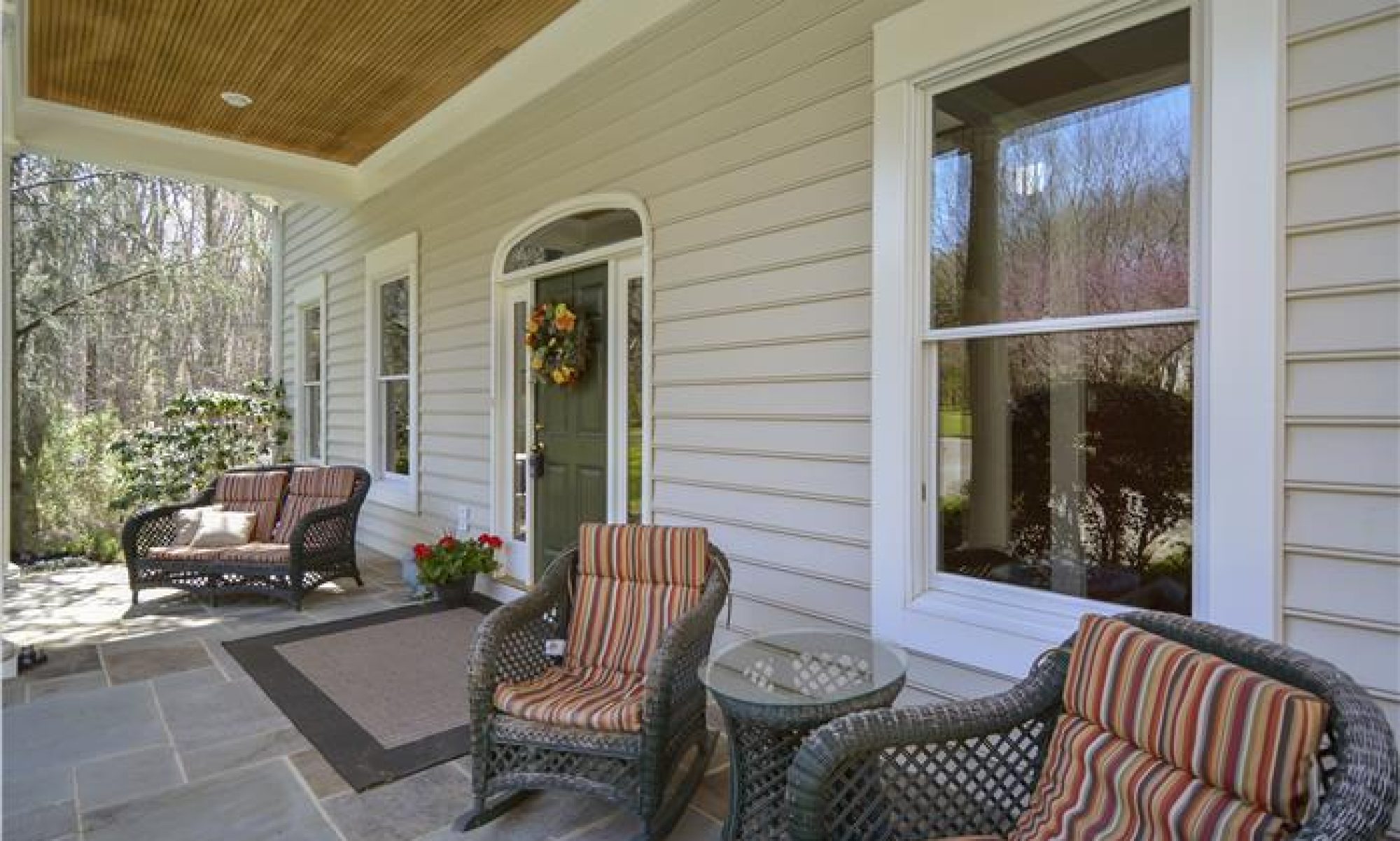
Finally, consider finishing the exterior to make your home more appealing and cordial.  Much like staging the home’s interior, you can use similar principles to increase the exterior’s attractiveness; such as placing appropriate chair(s) and potted plant(s) on the porch, deck or patio.

By Dan Krell
Copyright© 2017

If you like this post, do not copy; instead please:
link to the article,
like it at facebook
or re-tweet.

Protected by Copyscape Web Plagiarism Detector


Disclaimer. This article is not intended to provide nor should it be relied upon for legal and financial advice. Readers should not rely solely on the information contained herein, as it does not purport to be comprehensive or render specific advice. Readers should consult with an attorney regarding local real estate laws and customs as they vary by state and jurisdiction. Using this article without permission is a violation of copyright laws.

Misguided house makeover

house makeover
House Makeover (Infographic by Allianz Australia Home Insurance allianz.com.au)

Do you really need to spend money to make money?  Deciding what renovations and updates to make prior to your home sale can be tormenting.  It’s easy enough to say that your home needs a facelift; but, the repairs, updates, and painting costs money – and usually lots of it.  The suggestion of making renovations and updates to your home before you sell is everywhere, it’s on TV, the internet, and magazines.  And if you ask friends and real estate agents, they will also give you a list of “must do’s.”  Regardless of how you decide to do a house makeover before the sale, chances are that you’re not doing it right.

There is no doubt that many home buyers are looking for a turn-key home.  If your home is not “out of the box brand new,” you probably need to freshen it up, as well as make some repairs and updates.  But before you embark on the house makeover by making those renovations, you need to ask yourself two important questions: “How much money can I realistically allot for a makeover?” and “How much am I expecting to net from my home sale?

Does a house makeover really get you top dollar? Spending money on renovations will certainly make the home sell faster, but not necessarily make you more money.  And there is no guarantee that the house makeover renovations you make are to home buyers’ tastes.  So if you’re goal is to get top dollar, don’t look at the sale price.  Instead keep your eye on your estimated net (the amount you’re left with after the sale minus total renovation costs).

Of course, the best way to maintain your home’s value is to perform regular maintenance.  It would certainly make the home prep easier too!  But the reality is that many home owners defer maintenance until they feel it’s absolutely necessary.  Deferring maintenance can actually cost more in repairs down the line, and lower your home sale price.  Spending money to correct all the years of neglected repairs and updates prior to the home sale won’t necessarily get you top dollar.

Not all buyers are looking for renovated homes.  One of Stephen B. Billings conclusions in his recent research (Hedonic Amenity Valuation and Housing Renovations; Real Estate Economics; Fall 2015, 43:652-82) was that during the past “healthy” housing market, there was a balance between renovated and non-renovated homes that sold.  However, he also found there was an increase in renovated home sales during the housing downturn of 2007.

Selling your home “as-is” would certainly decrease your sale price, but could net you the same or even more if weighed against extensive renovations of the house makeover.  Consider that you would only recoup a fraction of the cost of a minor kitchen and bathroom remodel; which averages about $20,122 and $17,908 respectively (according to 2016 Cost vs Value Report; remodeling.hw.net).

Concentrate on the basics of decluttering first. Decluttering can make your home look different and feel larger.  Decluttering can set the stage for fo you decide on renovations, and maybe even home staging.

If you decide on freshening up your home before the sale, start with the basics.  Focus on deferred maintenance, and make necessary repairs.  Consider a fresh coat of paint, and maybe new carpets.  Wood floors don’t necessarily have to be replaced or sanded; flooring professionals use state of the art processes to “renew” wood floors.

If you decide on a house makeover, focus first on making repairs and freshening your home. Work out a budget and get several quotes from licensed contractors.  Don’t automatically go for the cheapest quote, even if you’re on a tight budget.  Focus on quality, even if it means limiting the scope of work.  Poor workmanship can sabotage your home sale by making your home look shabby and in need of additional repairs and updates.

Copyright © Dan Krell
Google+

If you like this post, do not copy; instead please:
link to the article,
like it at facebook
or re-tweet.

Protected by Copyscape Web Plagiarism Detector
Disclaimer. This article is not intended to provide nor should it be relied upon for legal and financial advice. Readers should not rely solely on the information contained herein, as it does not purport to be comprehensive or render specific advice. Readers should consult with an attorney regarding local real estate laws and customs as they vary by state and jurisdiction. Using this article without permission is a violation of copyright laws.

Housing market 2017

housing market 2017
Housing Market 2017(infographic from RE/MAX National Housing Report remax.com)

There’s no doubt that 2016 was an outstanding year for real estate and the housing market.  In fact, National Association of Realtors chief economist Lawrence Yun was reported to say in a January NAR press release (www.nar.realtor) that the 2016 housing market was the best since the Great Recession.  There were 5.45 million total existing home sales in 2016, which exceeded 5.25 million during 2015.  What is necessary for a great housing market 2017, and how will it finish the year?

January’s sales were strong and Dr Yun stated in the press release that there is “resilience” in a “rising interest rate environment:”

“Much of the country saw robust sales activity last month as strong hiring and improved consumer confidence at the end of last year appear to have sparked considerable interest in buying a home…

Market challenges remain, but the housing market is off to a prosperous start as home buyers staved off inventory levels that are far from adequate and deteriorating affordability conditions.”

Home prices also surged during 2016.  A February 28th S&P CoreLogic Case-Shiller U.S. National Home Price NSA Index press release (spindices.com) indicated a 30-month index high, increasing 5.8 percent during December.  The Seattle, Portland and Denver regions were at the top during this period, posting gains of 10.8 percent, 10.0 percent and 8.9 percent respectively (the Washington DC region gained a respectable 4.2 percent).  David M. Blitzer, Managing Director and Chairman of the Index Committee at S&P Dow Jones Indices stated:

“Home prices continue to advance, with the national average rising faster than at any time in the last two-and-a-half years…One factor behind rising home prices is low inventory. While sales of existing single family homes passed five million units at annual rates in January, the highest since 2007, the inventory of homes for sales remains quite low with a 3.6 month supply. New home sales at 555,000 in 2016 are up from recent years but remain below the average pace of 700,000 per year since 1990. Another factor supporting rising home prices is mortgage rates. A 30-year fixed rate mortgage today is 4.2% compared to the 6.4% average since 1990. Another indicator that home price levels are normal can be seen in the charts of Seattle and Portland OR. In the boom-bust of 2005-2009, prices of low, medium, and high-tier homes moved together, while in other periods, including now, the tiers experienced different patterns.”

Of course, the record year was nowhere near the peak market pace of 6.48 million existing home sales during 2006.  However, the economics of the market during that time was different; being influenced by outside forces such as uber-easy money policies and overzealous speculation in the housing market.

The peak market sales records may be a benchmark of a sort.  But in retrospect, those numbers are a reflection of a distorted market where speculators bought and sold homes in record numbers taking advantage of the easy money and a seemingly guaranteed big money payoff (which was a factor in the steep home appreciation spike at that time).  It was a crazy time for housing, when homes were flipped in a matter of days.  Many investors were even making money on homes they never owned by selling their interest in their purchase contracts.  The result was that home buyers found themselves either priced out of the market, or borrowing more than they could realistically afford because of the fierce buyer competition.

After posting impressive housing stats for 2016, the expectations for housing market 2017 are high.  And not surprisingly home sales started the year on the same pace, as the NAR reported January’s existing home sales (homes that settled during January) increased 3.3 percent.  However, the pending home sale index (homes under contract and described by NAR as a forward looking number) showed a different picture with 2.8 percent decrease during January.  Of course in the absence of bad weather, some economists explain that the decrease in pending home sales are due to low inventory and rising interest rates.

Housing Market 2017

Some are concerned about the decreased prospects of future home sales, suggesting that there won’t be a repeat performance of record home sales during 2017.  The recent pending home sale index release is reminiscent of the index reported for January 2014, where the NAR reported that the pending home sale index dropped 9 percent following post-recession record year of home sales during 2013.  At the end of 2014, it was revealed that existing home sales dropped 3 percent from the previous year.  Reasons given for the decrease were low inventory and tight lending.

Many, like myself, remain optimistic for housing market 2017 because interest rates remain historically low, even with recent rate hikes; and mortgage lending has been the easiest since the financial crisis.  The sentiment for housing market 2017 is also shared by consumers; who conveyed increased optimism about the housing market in Fannie Mae’s 2017 Home Purchase Sentiment Index (HPSI).  The February 17th News release (fanniemae.com) indicated that the January’s HPSI increased 2 percent, which is 1.2 percent higher than the same time last year. Doug Duncan, senior vice president and chief economist at Fannie Mae, stated:

“Three months after the presidential election, measures of consumer optimism regarding personal financial prospects and the economy are at or near the highest levels we’ve seen in the nearly seven-year history of the National Housing Survey…However, any significant acceleration in housing activity will depend on whether consumers’ favorable expectations are realized in the form of income gains sufficient to offset constrained housing affordability. If consumers’ anticipation of further increases in home prices and mortgage rates materialize over the next 12 months, then we may see housing affordability tighten even more.”

Copyright © Dan Krell
Google+

If you like this post, do not copy; instead please:
link to the article,
like it at facebook
or re-tweet.